
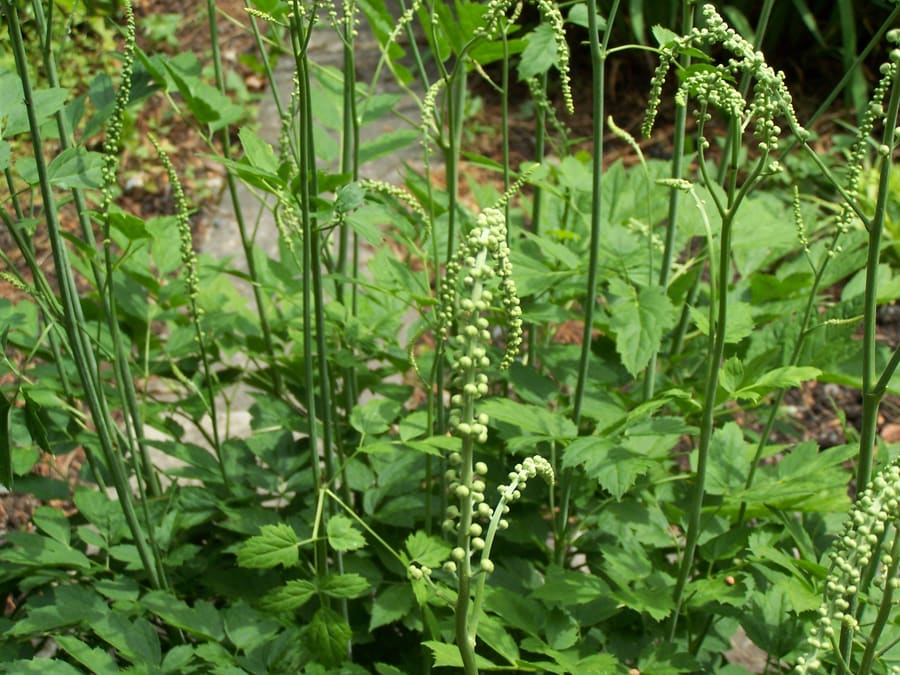
Black Cohosh (Cimicifuga racemosa)
Photo: No machine-readable author provided. Valérie75 assumed (based on copyright claims). · CC BY-SA 3.0
- Female Reproductive
- 3 conditions
- Licensed photo
Overview
Black cohosh (Cimicifuga racemosa) is a tall herbaceous perennial, growing up to about 8 ft (2.5 m) with creamy-white flower spikes. Its thick, knobby root has a bitter, acrid taste and a distinctive odor. Native Americans used the root for a variety of conditions, including menstrual cramps, kidney ailments and sore throat; NCCIH says research has focused on menopause symptoms, and there aren't enough reliable data on other uses.
Traditional uses & properties
Menstrual cramps (traditional use): Traditionally used for menstrual cramps; NCCIH says there aren't enough reliable data to show whether black cohosh helps uses other than menopause symptoms. Menopause: Black cohosh is mostly used for menopause symptoms; NCCIH says a 2023 review of 22 studies found products containing it potentially beneficial for overall menopause symptoms, with improvement in hot flashes.
Safety & precautions
Liver: LiverTox describes many reported cases of acute liver injury with products sold as black cohosh, some severe enough to need a liver transplant or to cause death. NCCIH calls these problems rare and says it is uncertain whether black cohosh itself or contaminants were responsible. Stop and contact a clinician if you notice dark urine, fatigue, abdominal pain or yellowing skin or eyes. Pregnancy: MSK advises avoiding black cohosh during pregnancy because it may act as an abortifacient, and NCCIH says it may not be safe during pregnancy or breastfeeding. Side Effects in Large Doses: May cause headaches, dizziness, central nervous system irritation, nausea, and vomiting. Hormone-Sensitive Conditions: Without professional guidance, avoid it with any hormone-sensitive condition or after breast cancer.
Educational reference only - not medical advice. Herbs can interact with medications. Consult a qualified healthcare provider before use. Full disclaimer.
Drug interactions
The sources differ in emphasis. ODS says black cohosh has no known clinically relevant interactions with medicines, while noting this has not been studied systematically. MSK lists several possible interactions, mostly from laboratory findings. [1, 2]
- Tamoxifen
- MSK says black cohosh may interfere with tamoxifen. Whether this affects patients has not been shown. [2]
- Doxorubicin and docetaxel
- MSK reports research signals that black cohosh might make these chemotherapy drugs more toxic. The significance for patients is undetermined. [2]
- Simvastatin
- In research described by MSK, black cohosh and its constituent actein acted together with simvastatin, which could strengthen both its effect and its side effects. [2]
- Medicines broken down by CYP3A4
- MSK lists a possible interaction that has not been confirmed. [2]
How to read this section: each entry is HerbMate's summary of what the cited sources report. Words such as "may", "theoretical" or "in laboratory or animal studies" mean the effect has not been confirmed in people, and "case report" means it was seen in one or a few patients. A medicine that is not listed here has not been shown to be safe with this herb. The numbers in brackets link to the sources at the foot of the page.
Habitat
Black cohosh is native to Canada and the eastern U.S. (as far south as Florida), favoring shady woodland areas and hedgerows. It also grows in parts of Europe, often self-seeding from cultivated plants. Typically, it is grown from seed and harvested in the autumn when the root is at its most potent.
Sources
The interaction notes and the statements on this page that name a source were written by HerbMate from these references, which were last checked in October 2026. They are summaries, not medical advice; ask a pharmacist about your own medicines.
Traditionally used for
Each condition shows its first 2 remedies free. Premium opens the full remedy list for every condition - or come back for the free Condition of the Day.
Frequently asked questions
What is Black Cohosh (Cimicifuga racemosa) traditionally used for?
Traditional sources describe Black Cohosh (Cimicifuga racemosa) as follows: Menstrual cramps (traditional use): Traditionally used for menstrual cramps; NCCIH says there aren't enough reliable data to show whether black cohosh helps uses other than menopause symptoms. Menopause: Black cohosh is mostly used for menopause symptoms; NCCIH says a 2023 review of 22 studies found products containing it potentially beneficial for overall menopause symptoms, with improvement in hot flashes.
What safety cautions apply to Black Cohosh (Cimicifuga racemosa)?
Liver: LiverTox describes many reported cases of acute liver injury with products sold as black cohosh, some severe enough to need a liver transplant or to cause death. NCCIH calls these problems rare and says it is uncertain whether black cohosh itself or contaminants were responsible. Stop and contact a clinician if you notice dark urine, fatigue, abdominal pain or yellowing skin or eyes. Pregnancy: MSK advises avoiding black cohosh during pregnancy because it may act as an abortifacient, and NCCIH says it may not be safe during pregnancy or breastfeeding. Side Effects in Large Doses: May cause headaches, dizziness, central nervous system irritation, nausea, and vomiting. Hormone-Sensitive Conditions: Without professional guidance, avoid it with any hormone-sensitive condition or after breast cancer.
Related herbs
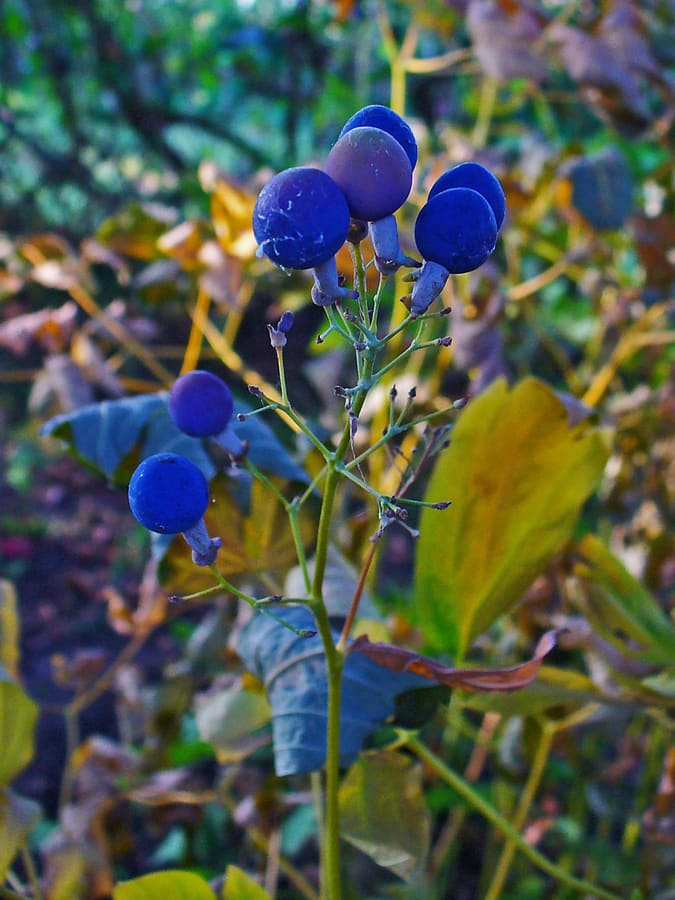 Blue Cohosh (Caulophyllum thalictroides)Not for self-dosing
Blue cohosh is an upright perennial herb reaching 3 feet in height, with large three-lobed leaves, yellow to purple flowers, and striking blue berries. It grows wild in much of eastern North America from Manitoba to Alabama, preferring woodland valleys and damp, north-facing slopes. The name 'cohosh' comes from the Algonquin language, and the plant was a popular remedy among many Native American tribes.
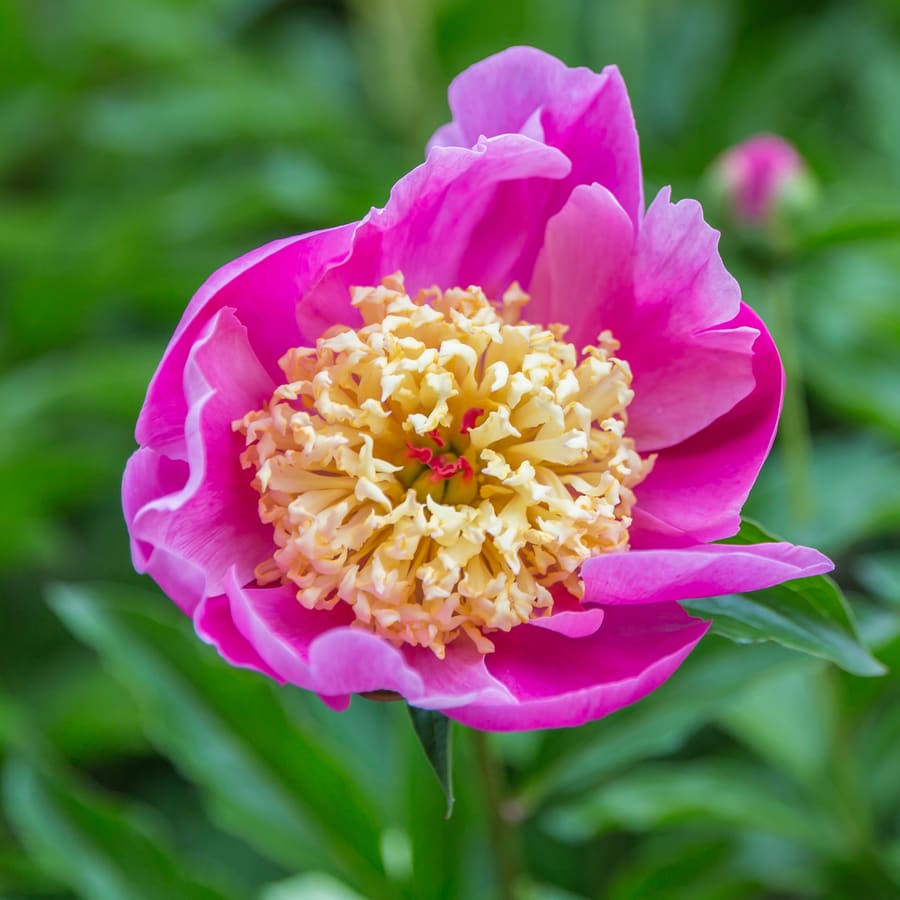 Chinese Peony / White Peony (Paeonia lactiflora)
White peony is an upright perennial growing to 6.5 feet with large white flowers and divided, dark green leaves. Its history of use in China stretches back at least 1,500 years, and it is one of the herbs in 'Four Things Soup.' The plant is cultivated throughout northeastern China and Inner Mongolia, propagated from seed in spring or from root cuttings in winter. The root of 4- or 5-year-old plants is harvested in spring or autumn.
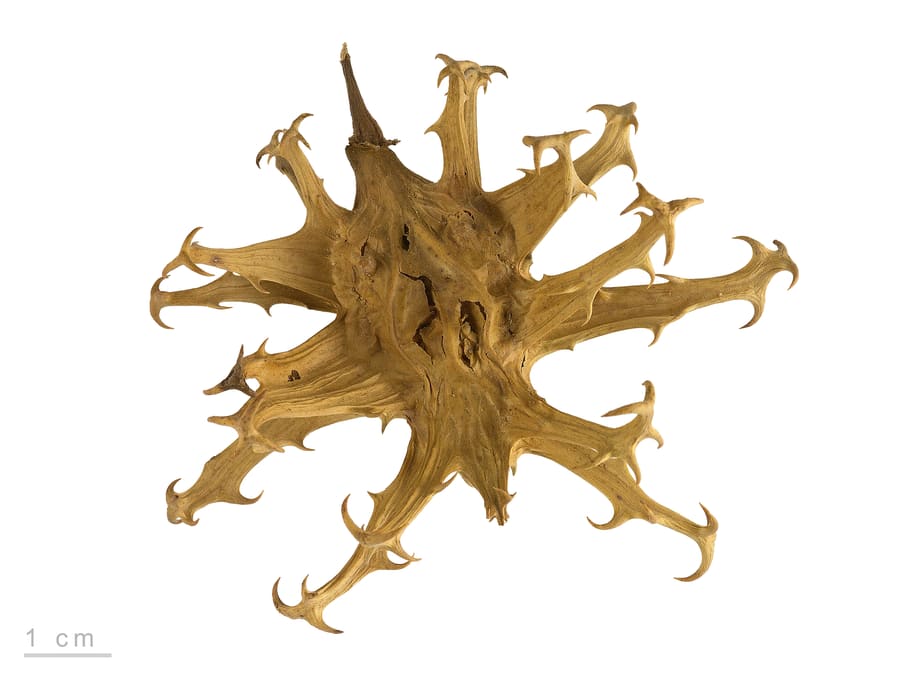 Devil's Claw (Harpagophytum procumbens)
Devil’s claw (Harpagophytum procumbens) is a trailing perennial native to southern Africa, named for its hooked, woody fruits. Its tuber has long been used in traditional medicine for pain, fever, and stomach complaints; MSK says no scientific evidence supports its use for digestive disorders. Today it is mostly taken for joint and back pain; MSK says small studies suggest it may help osteoarthritis of the hip or knee and back pain, but larger studies are needed.
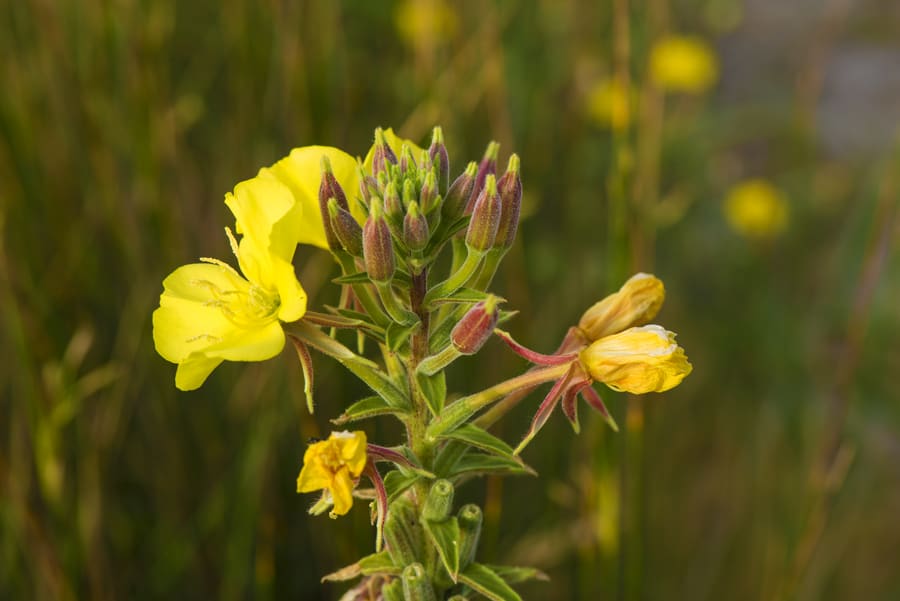 Evening Primrose (Oenothera biennis)
Biennial herb growing to 8 in (20 cm). Has red blotches on stem, crinkled lance-shaped leaves, 4-petaled yellow flowers, and elongated seed capsules.
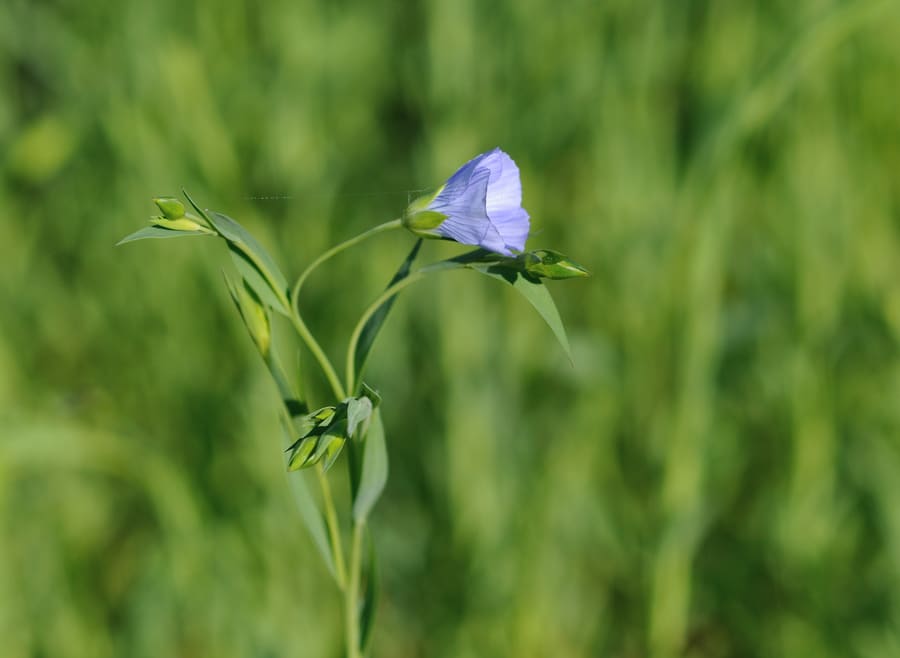 Flaxseed (Linum usitatissimum)
, also called linseed, is a slender annual plant growing up to about 3 ft (1 m). It produces narrow leaves, delicate blue flowers, and spherical seed capsules containing shiny, flat seeds. Long cultivated in the Middle East and beyond, flaxseeds are rich in fatty acids (particularly alpha-linolenic acid), protein, fiber, mucilage, and lignans (phytoestrogens). Flaxseed and flaxseed oil supplements are promoted for the heart, brain and immune system, although NCCIH describes the research on them as being of varying quality.
 Ginkgo (Ginkgo biloba)
 is a distinctive, long-lived deciduous tree that can grow up to about 100 ft (30 m). It has fan-shaped leaves with radiating veins, often turning bright yellow in autumn. Ginkgo is widely promoted for cognitive impairment and dementia, and with claims that it can enhance cognitive performance in healthy people. NCCIH says ginkgo has not been shown to be effective for any condition studied, including preventing dementia.
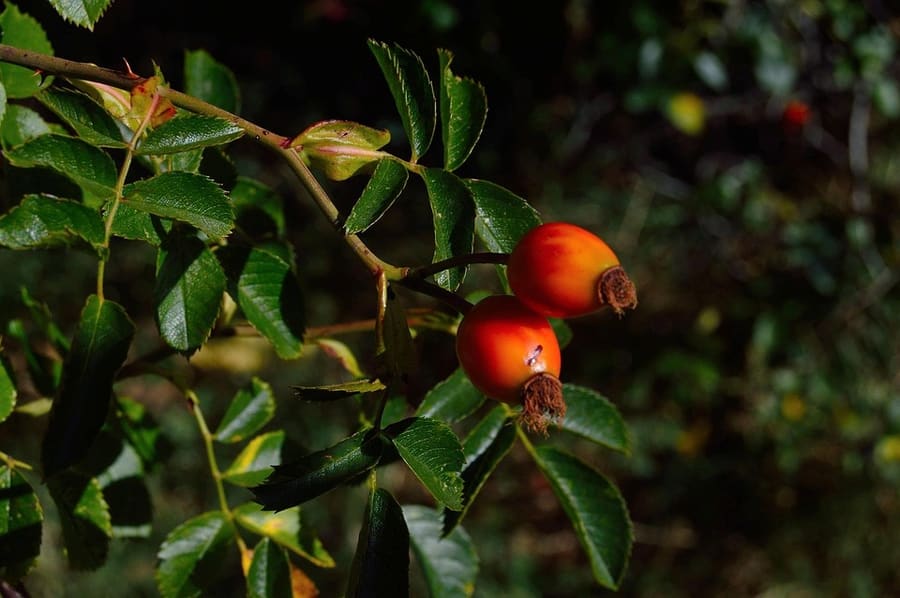 Goji Berry (Lycium chinense)
Goji berry (Lycium barbarum) is a deciduous shrub that can grow up to about 13 ft (4 m), bearing bright green leaves and vivid scarlet berries. Goji berries have been used in Traditional Chinese Medicine, with references stretching back to the 1st century CE. The berries are rich in vitamins, polysaccharides, and carotenoids.
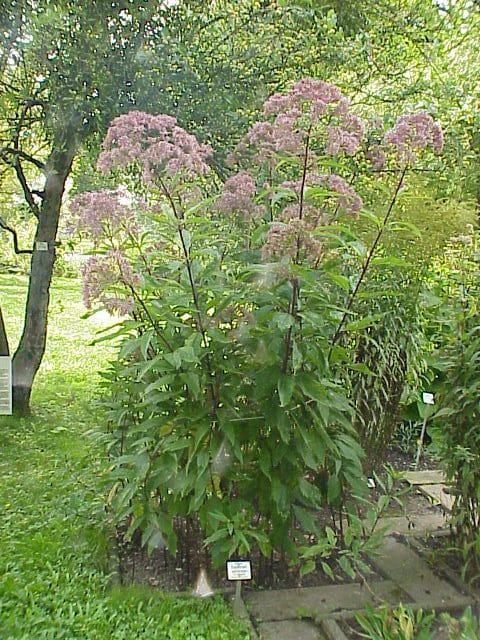 Gravel Root (Eupatorium purpureum)
Gravel root is an erect perennial growing to 5 feet with whorls of pointed oblong leaves and clusters of purple-pink florets. Native to eastern North America, the root is unearthed in autumn. The plant's alternative name, Joe Pye weed, honors a Native American named Joe Pye. The root was listed in the Pharmacopoeia of the United States from 1820 to 1842.