
Herb comparison
Gravel Root (Eupatorium purpureum) vs Pipsissewa (Chimaphila umbellata)
Both plants are listed as traditional remedies for 3 of the same conditions, which is why they are easy to confuse. Their descriptions and full safety notes are below, free.
- About
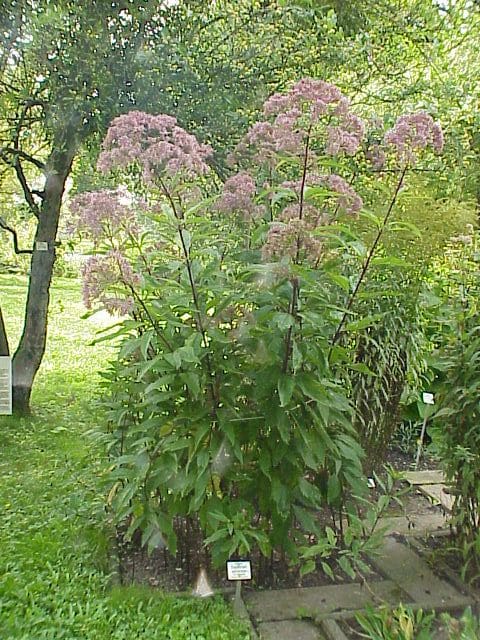
- Gravel root is an erect perennial growing to 5 feet with whorls of pointed oblong leaves and clusters of purple-pink florets. Native to eastern North America, the root is unearthed in autumn. The plant's alternative name, Joe Pye weed, honors a Native American named Joe Pye. The root was listed in the Pharmacopoeia of the United States from 1820 to 1842.Pipsissewa (Chimaphila umbellata) is an evergreen plant about 8 in (20 cm) tall, with glossy, wedge-shaped leaves and small, pinkish-white flowers in flat-topped clusters. It is a close relative of uva ursi.
- Safety & precautions
- Contains pyrrolizidine alkaloids. Not recommended for long-term use or for pregnant or nursing women due to potential liver toxicity from pyrrolizidine alkaloids. Use only for short-term treatment under professional guidance.Caution: Seek professional advice if symptoms are severe or if combining with other diuretics.
Safety text above is printed in full and is never abbreviated. For each plant’s complete precautions, drug and food interactions and preparation notes, open its own page - both are free.
Conditions that list both
Related comparisons
- Couch Grass (Elymus repens) vs Gravel Root (Eupatorium purpureum)
- Goldenrod (Solidago virgaurea) vs Gravel Root (Eupatorium purpureum)
- Devil's Claw (Harpagophytum procumbens) vs Gravel Root (Eupatorium purpureum)
- Devil's Claw (Harpagophytum procumbens) vs Pipsissewa (Chimaphila umbellata)
- Gravel Root (Eupatorium purpureum) vs Nettle (Urtica dioica)
- Gravel Root (Eupatorium purpureum) vs Pygeum (Pygeum africanum)