
Herb comparison
Devil's Claw (Harpagophytum procumbens) vs Pipsissewa (Chimaphila umbellata)
Both plants are listed as traditional remedies for 2 of the same conditions, which is why they are easy to confuse. Their descriptions and full safety notes are below, free.
- About
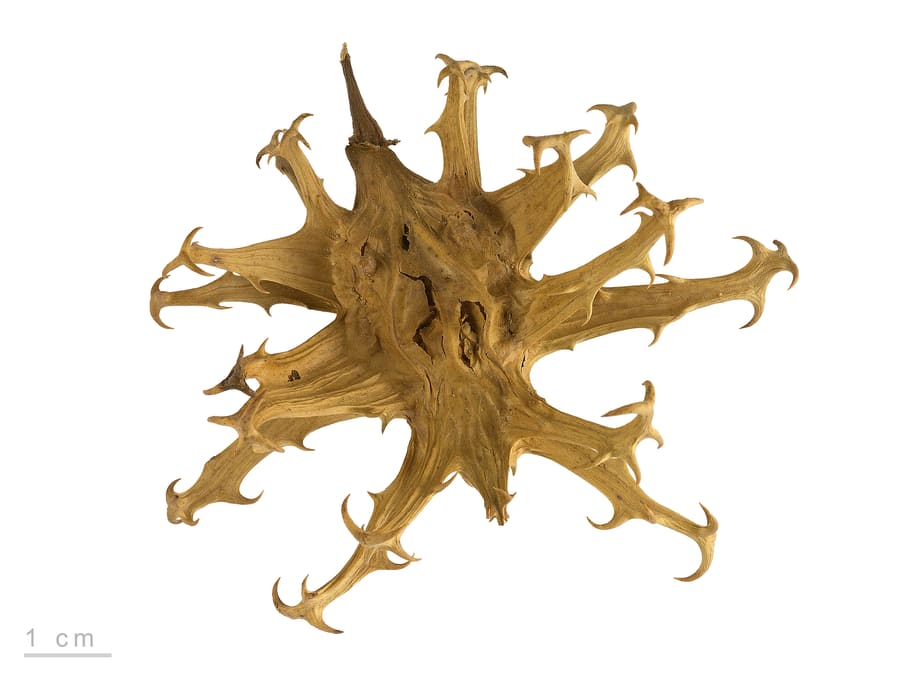
- Devil’s claw (Harpagophytum procumbens) is a trailing perennial native to southern Africa, named for its hooked, woody fruits. Its tuber has long been used in traditional medicine for pain, fever, and stomach complaints; MSK says no scientific evidence supports its use for digestive disorders. Today it is mostly taken for joint and back pain; MSK says small studies suggest it may help osteoarthritis of the hip or knee and back pain, but larger studies are needed.Pipsissewa (Chimaphila umbellata) is an evergreen plant about 8 in (20 cm) tall, with glossy, wedge-shaped leaves and small, pinkish-white flowers in flat-topped clusters. It is a close relative of uva ursi.
- Safety & precautions
- Gastric/Duodenal Ulcers: Not advised if you have active peptic ulcers. Gallstones or Pregnancy: Use cautiously under professional guidance; devil’s claw may stimulate digestive secretions and uterine activity.Caution: Seek professional advice if symptoms are severe or if combining with other diuretics.
Safety text above is printed in full and is never abbreviated. For each plant’s complete precautions, drug and food interactions and preparation notes, open its own page - both are free.