
Herb comparison
Cardamom (Eletteria cardamomum) vs Jasmine (Jasminum grandiflorum)
Both plants are listed as traditional remedies for 2 of the same conditions, which is why they are easy to confuse. Their descriptions and full safety notes are below, free.
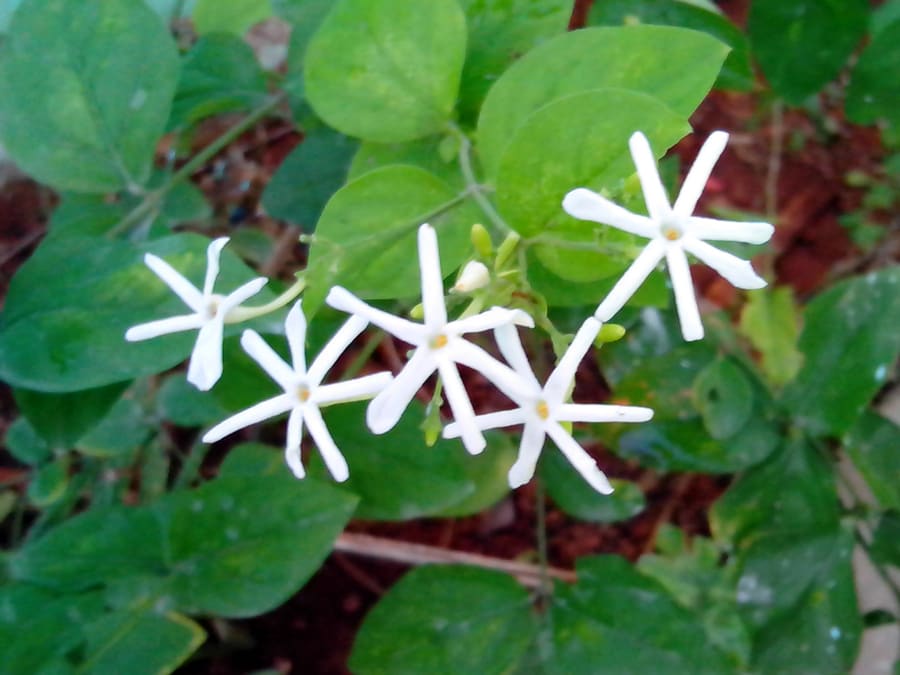
- About
- Cardamom is an aromatic spice long prized for its fragrant, pungent taste. Thanks to its agreeable flavor, cardamom is often added to herbal formulas to improve taste.Jasmine (Jasminum officinale) is a slender evergreen climber, growing up to around 20 ft (6 m), noted for its dark green compound leaves and sweetly scented, tubular white flowers. The blossoms yield a prized essential oil.
- Safety & precautions
- General Safety: Ask a qualified professional before taking cardamom in medicinal amounts. Essential Oil: The volatile oil should not be taken internally in its pure form.Essential Oil: Often adulterated; not for internal use. Allergies: Rare but possible, especially with topical application. Pregnancy: Exercise caution and avoid high concentrations without professional guidance.
Safety text above is printed in full and is never abbreviated. For each plant’s complete precautions, drug and food interactions and preparation notes, open its own page - both are free.
Conditions that list both
Related comparisons
- Ashwagandha (Withania somnifera) vs Jasmine (Jasminum grandiflorum)
- Bacopa (Bacopa monnieri) vs Jasmine (Jasminum grandiflorum)
- Cardamom (Eletteria cardamomum) vs Codonopsis (Codonopsis pilosula)
- Cardamom (Eletteria cardamomum) vs Saffron (Crocus sativa)
- Cardamom (Eletteria cardamomum) vs St. John’s Wort (Hypericum perforatum)