
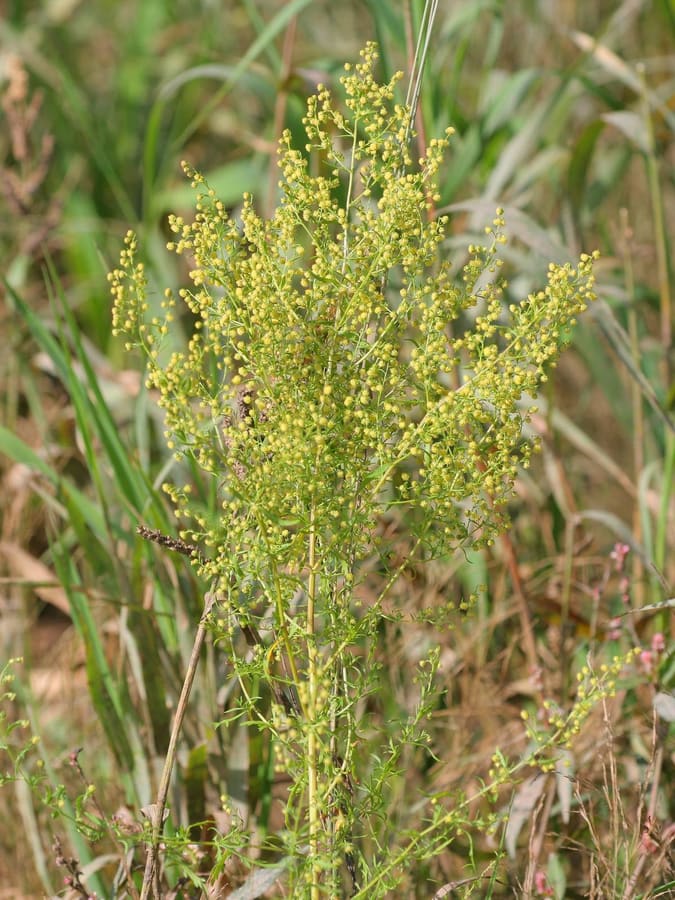
Sweet Annie (Artemisia annua)
Photo: Kristian Peters -- Fabelfroh 11:39, 16 September 2007 (UTC) · CC BY-SA 3.0
- General
- 2 conditions
- Licensed photo
Overview
Sweet Annie (Artemisia annua), or qing hao, is an aromatic annual in the daisy family with finely divided, feathery leaves and small yellowish flower heads. It contains artemisinin and has been used in traditional Chinese medicine for fevers and malaria; MSK notes that artemisinin-based combination therapies are part of standard malaria treatment. Malaria needs urgent medical treatment.
Traditional uses & properties
Malaria (traditional use): Used in traditional Chinese medicine for malaria; malaria needs urgent medical treatment. Fevers and Headaches (traditional use): Used in traditional Chinese medicine for fevers and headaches; MSK says studies of artemisia for conditions other than malaria are limited.
Safety & precautions
Professional Advice: Take only with guidance, especially for malaria. Pregnancy & Nursing: Not recommended. High Doses: Potentially toxic; do not exceed recommended amounts.
Educational reference only - not medical advice. Herbs can interact with medications. Consult a qualified healthcare provider before use. Full disclaimer.
Drug interactions
Interaction data is not available for this herb - talk to a pharmacist before combining it with any medication. A blank entry here means we have not documented interactions, not that none exist.
Habitat
Native to parts of Asia (China, Vietnam, Japan) and Russia, sweet Annie also grows in North America. Harvest the leaves in summer before flowering. In large-scale production, it’s cultivated in eastern China.
Sources
The interaction notes and the statements on this page that name a source were written by HerbMate from these references, which were last checked in October 2026. They are summaries, not medical advice; ask a pharmacist about your own medicines.
Traditionally used for
Each condition shows its first 2 remedies free. Premium opens the full remedy list for every condition - or come back for the free Condition of the Day.
Frequently asked questions
What is Sweet Annie (Artemisia annua) traditionally used for?
Traditional sources describe Sweet Annie (Artemisia annua) as follows: Malaria (traditional use): Used in traditional Chinese medicine for malaria; malaria needs urgent medical treatment. Fevers and Headaches (traditional use): Used in traditional Chinese medicine for fevers and headaches; MSK says studies of artemisia for conditions other than malaria are limited.
What safety cautions apply to Sweet Annie (Artemisia annua)?
Professional Advice: Take only with guidance, especially for malaria. Pregnancy & Nursing: Not recommended. High Doses: Potentially toxic; do not exceed recommended amounts.
Related herbs
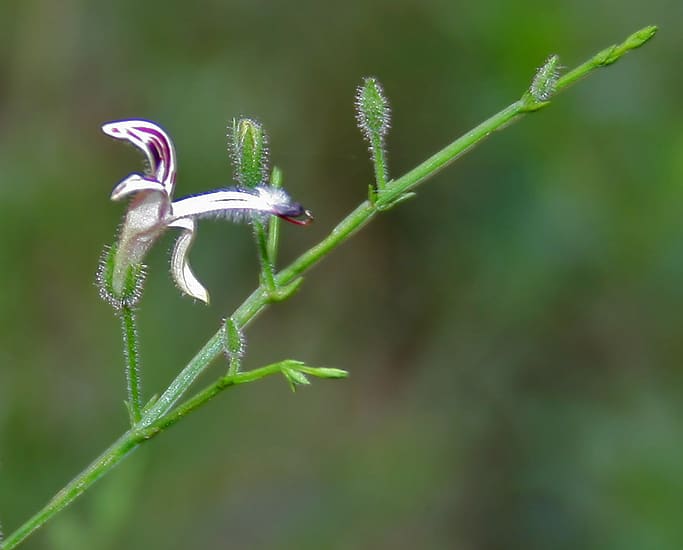 Andrographis (Andrographis paniculata)
Andrographis, commonly known as Green Chiretta or King of Bitters, is an upright annual herb reaching approximately 3 feet in height. Native to India and cultivated throughout northern regions of India and China, this bitter medicinal plant has been valued in Ayurvedic and traditional Chinese medicine for centuries. MSK notes that it has been studied mostly for colds, flu and upper respiratory infections. The plant thrives on plains and in forest undergrowth, where its spotted pale brown or purple flowers and long seed capsules distinguish it from other medicinal herbs.
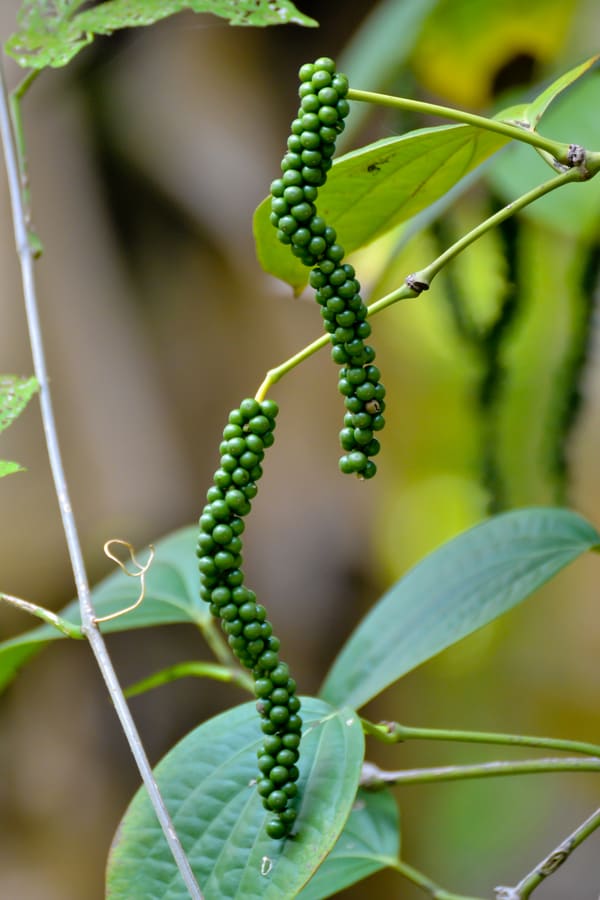 Black Pepper (Piper nigrum)
Black pepper is a perennial woody climbing vine growing to about 16 feet, with large oval leaves, spikes of small white flowers, and clusters of small round fruits that ripen from green to red. Native to southwestern India and now cultivated in tropical areas worldwide, the fruit is harvested from plants that are at least three years old. Different processing methods yield green, black, red, and white peppercorns, each with distinct flavors and uses. Cultivated as both a spice and medicine since ancient times, pepper was such a prized commodity in world trade that Attila the Hun reportedly demanded 3,000 pounds of it as ransom during his siege of Rome in 408 CE.
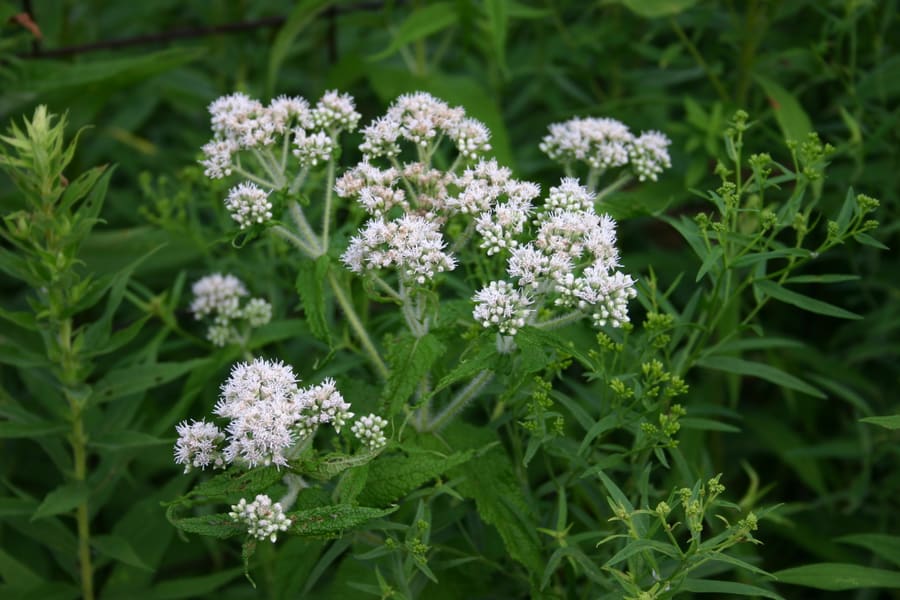 Boneset (Eupatorium perfoliatum)Not for self-dosing
Boneset (Eupatorium perfoliatum) is a bitter-tasting, upright perennial that can reach about 5 ft (1.5 m). It has lance-shaped leaves and clusters of small white or sometimes purple florets.
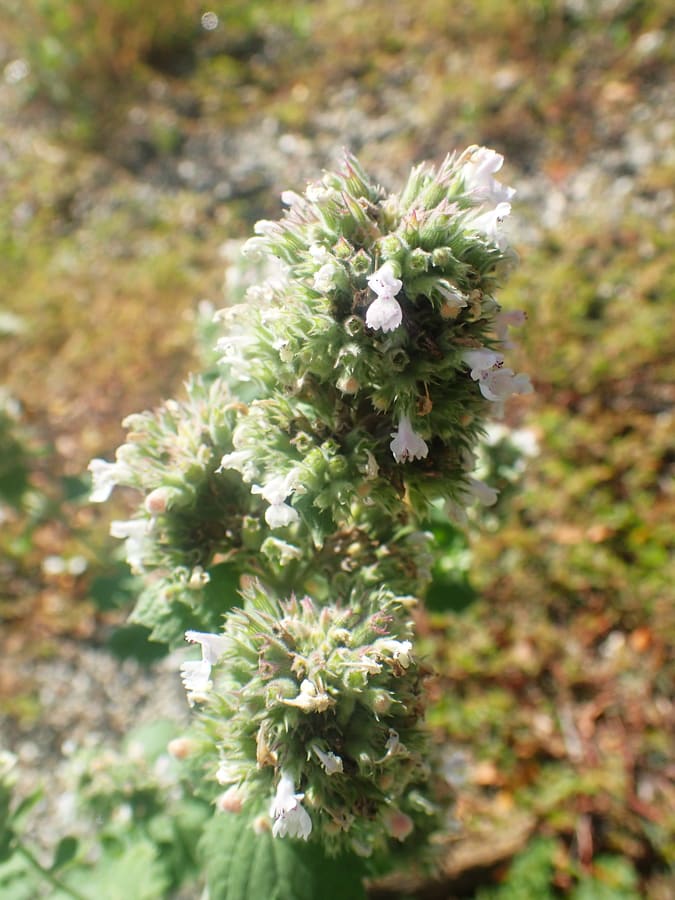 Catnip (Nepeta cataria)
Catnip is a downy, aromatic perennial growing to 3 feet with heart-shaped, gray-green leaves and whorls of white flowers marked with purple spots. Native to Europe and naturalized in North America, it grows in dry wayside places and mountainous regions up to altitudes of 5,000 feet. The plant is gathered when in flower during summer and autumn. Catnip has an excitatory effect on cats.
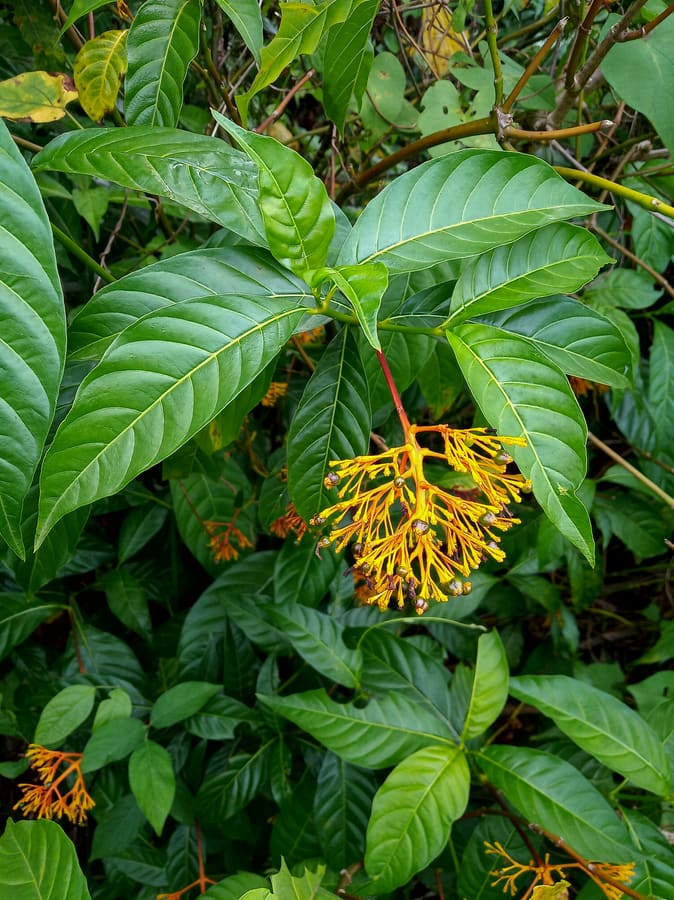 Cinchona (Rubiaceae)Not for self-dosing
Cinchona is an evergreen tree, growing to about 80 ft (25 m). It has reddish bark and large leaves that can reach 20 in (50 cm). It is historically famous as the source of quinine, and it also contains other alkaloids, including quinidine. The bark is bitter and astringent.
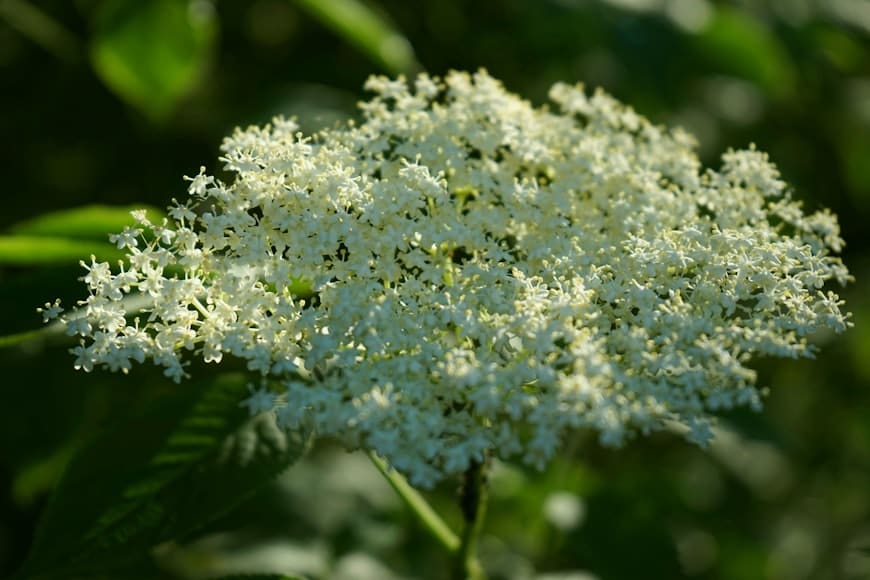 Elder (Sambucus nigra)
Elder (Sambucus nigra in Europe) is a deciduous tree that can reach 33 ft (10 m), bearing cream-colored clusters of flowers and dark blue-black berries. Rich in folklore, elder was historically believed to house a protective spirit (“Elder Mother”). Elderberry has been used in folk medicine for colds and flu; NCCIH says preliminary research suggests elderberry may relieve symptoms of flu, colds, or other upper respiratory infections.
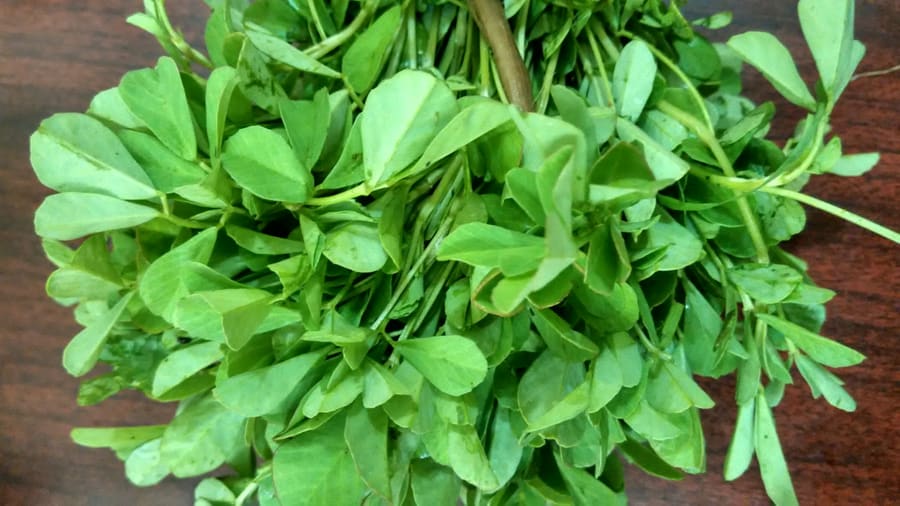 Fenugreek (Trigonella foenum-graecum)
Fenugreek is much used in herbal medicine in North Africa, the Middle East, and India. Its seeds have been used to increase breast-milk production; NCCIH says studies of this use have had mixed results. Fenugreek is also thought to be antidiabetic, although NCCIH says there is not enough high-quality evidence to know whether it helps diabetes.
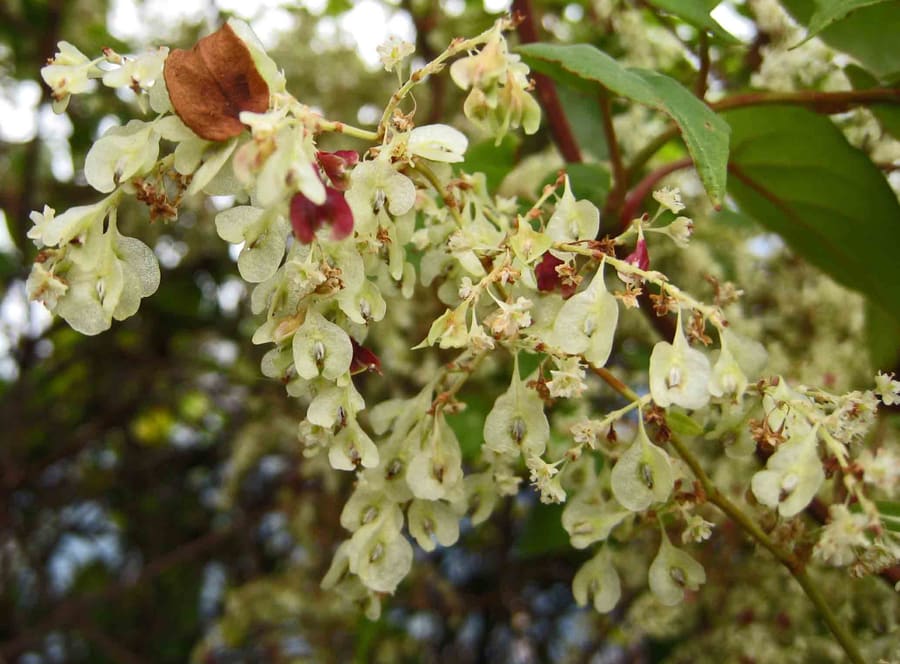 Fo Ti (Polygonum multiflorum)Not for self-dosing
Fo ti (Polygonum multiflorum), also known as he shou wu, is a perennial vine used in Traditional Chinese Medicine (TCM).