
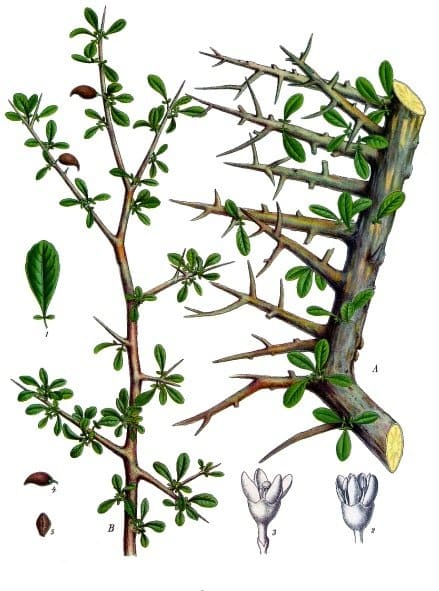
Myrrh (Commiphora molmol)
Photo: Franz Eugen Köhler, Köhler's Medizinal-Pflanzen · Public domain
- Skeletal
- 2 conditions
- Licensed photo
Overview
Myrrh is a resin obtained from several Commiphora species, notably C. myrrha, recognized by its thick, yellowish-red gum resin. It is bitter in taste and aromatic.
Traditional uses & properties
Aromatic: Has been employed historically in incense, embalming, and perfumes.
Safety & precautions
Pregnancy: Should not be used internally; it can stimulate the uterus. Essential Oil: Not advisable to ingest without professional supervision; can be irritating if used improperly.
Educational reference only - not medical advice. Herbs can interact with medications. Consult a qualified healthcare provider before use. Full disclaimer.
Drug interactions
Interaction data is not available for this herb - talk to a pharmacist before combining it with any medication. A blank entry here means we have not documented interactions, not that none exist.
Habitat
Native to northeast Africa (Somalia, Ethiopia) and parts of the Middle East, myrrh trees grow in dry, well-drained soils. The gum resin seeps out when the bark is cut, drying into solid lumps.
Traditionally used for
Each condition shows its first 2 remedies free. Premium opens the full remedy list for every condition - or come back for the free Condition of the Day.
Frequently asked questions
What is Myrrh (Commiphora molmol) traditionally used for?
Traditional sources describe Myrrh (Commiphora molmol) as follows: Aromatic: Has been employed historically in incense, embalming, and perfumes.
What safety cautions apply to Myrrh (Commiphora molmol)?
Pregnancy: Should not be used internally; it can stimulate the uterus. Essential Oil: Not advisable to ingest without professional supervision; can be irritating if used improperly.
Related herbs
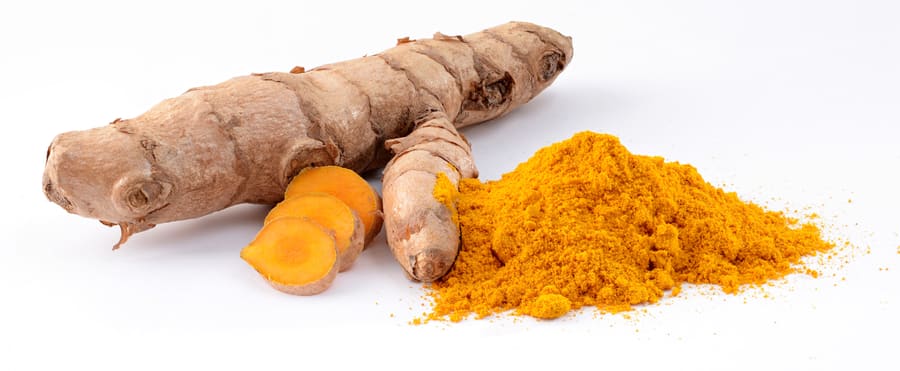 Turmeric (Curcuma longa)
Turmeric (Curcuma longa) is a perennial with a thick rhizome, growing to about 3 ft (90 cm), featuring lance-shaped leaves and pale yellow flowers. Renowned for its bright yellow-orange color, turmeric is a spice commonly employed in Indian cooking and in Ayurveda, where it has been used for indigestion, colds, skin infections, and arthritis. NCCIH says there isn't enough evidence to conclude that turmeric or curcumin is beneficial for any health purpose.
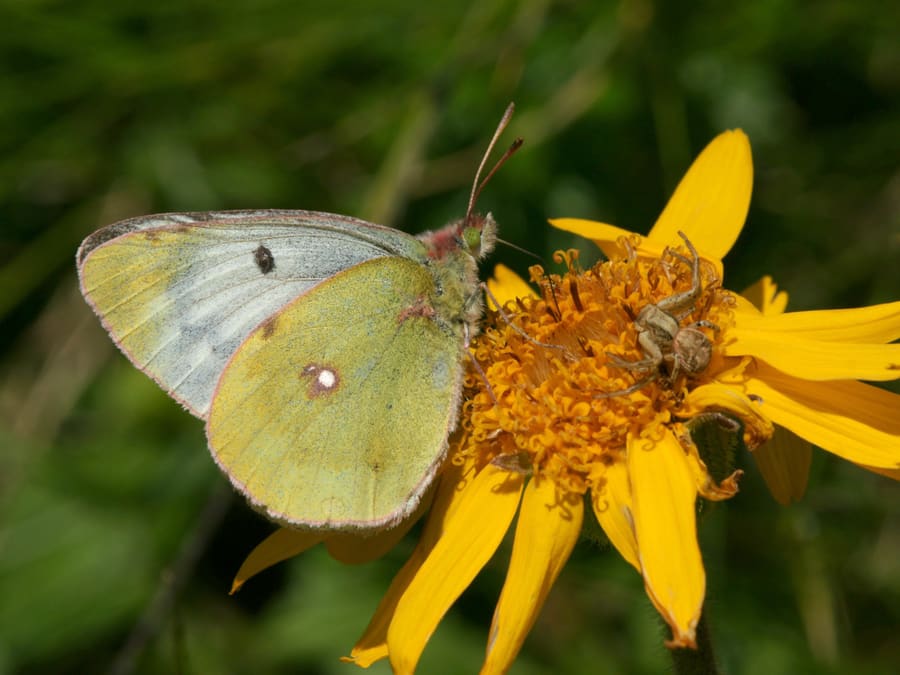 Arnica (Arnica montana)Not for self-dosing
Arnica is an aromatic perennial, usually about 1 ft (30 cm) high, with downy, oval-shaped leaves and bright yellow daisy-like flowers. Its flowers and roots have traditionally been used for bruises, sprains, arthritic pain and muscle aches, and a highly diluted form is used in homeopathy; MSK says a few clinical trials suggest topical arnica may help osteoarthritis and bruising, but rigorous research on homeopathic arnica is still needed. Arnica taken internally can be toxic (see precautions).
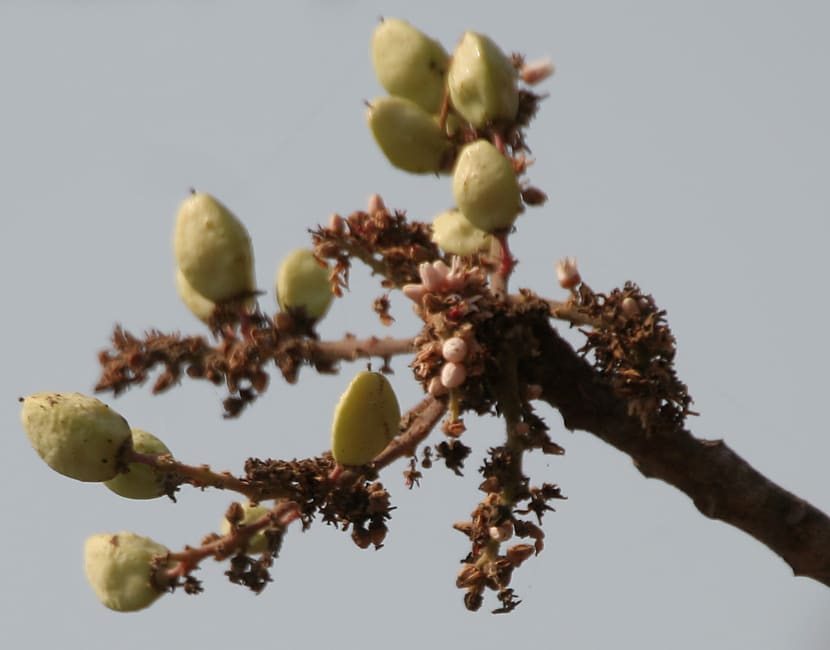 Boswellia (Boswellia serrata)
Boswellia is a deciduous tree growing to about 49 ft (15 m), characterized by its pale, papery bark, compound leaves, and small clusters of white flowers. The resin of the tree has traditionally been used in Ayurveda for arthritis, inflammation and pain, and some respiratory conditions (NCCIH). The key active components are boswellic acids. NCCIH says some studies suggest oral boswellia may ease osteoarthritis pain and inflammation, but there is not enough high-quality evidence to know whether it helps any health condition.
- Corydalis (Corydalis yanhusuo)
Corydalis is a small herbaceous perennial growing to 8 inches with narrow leaves and pink flowers. Native to Siberia, northern China, and Japan, it is commonly cultivated in eastern and northeastern parts of China. Propagated from seed in early spring or autumn, the rhizome is harvested in late spring and early summer when the aerial parts have withered. It has been part of Chinese herbal medicine since at least the 8th century.
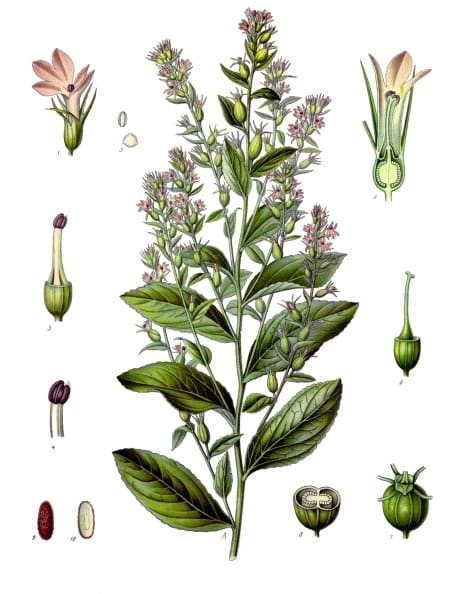 Lobelia (Lobelia inflata)Not for self-dosing
Lobelia is an annual herb growing to 20 inches with lance-shaped leaves and pale blue, pink-tinged flowers. It was used as a 'puke weed' to induce vomiting. Lobelia was also smoked as a substitute for tobacco and was reputed to share some of its magical qualities. Indigenous to North America, especially eastern parts of the United States, it grows by roadsides and in neglected areas, preferring acid soil. The aerial parts are harvested in early autumn when the seed capsules are most numerous and are carefully dried. Its use was later championed by the American herbalist Samuel Thomson (1769-1843), who made the herb the mainstay of his therapeutic system, mainly using it to induce vomiting.
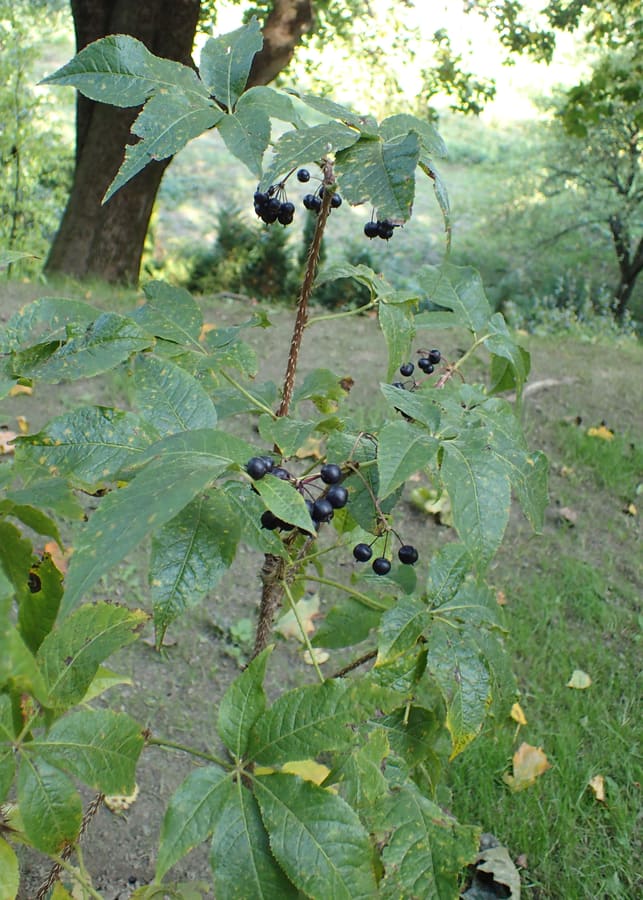 Siberian Ginseng (Eleutherococcus senticosus)
Siberian ginseng (Eleutherococcus senticosus), also called Eleuthero, is a deciduous, hardy shrub reaching up to about 10 ft (3 m). It features 3-7 toothed leaflets per stem and spiny branches. Regarded as an adaptogen, Siberian ginseng has been used traditionally as an adaptogen, performance enhancer and immunostimulant; MSK says studies in humans are quite limited.
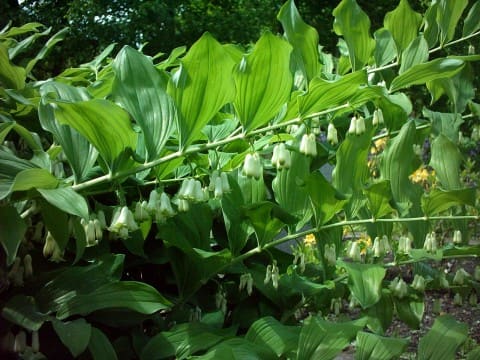 Solomon’s Seal (Polygonatum multiflorum)
Solomon’s seal (Polygonatum multiflorum) is a perennial up to about 20 in (50 cm), with arching stems, elliptical leaves, and bell-shaped greenish-white flowers, followed by blue-black berries.
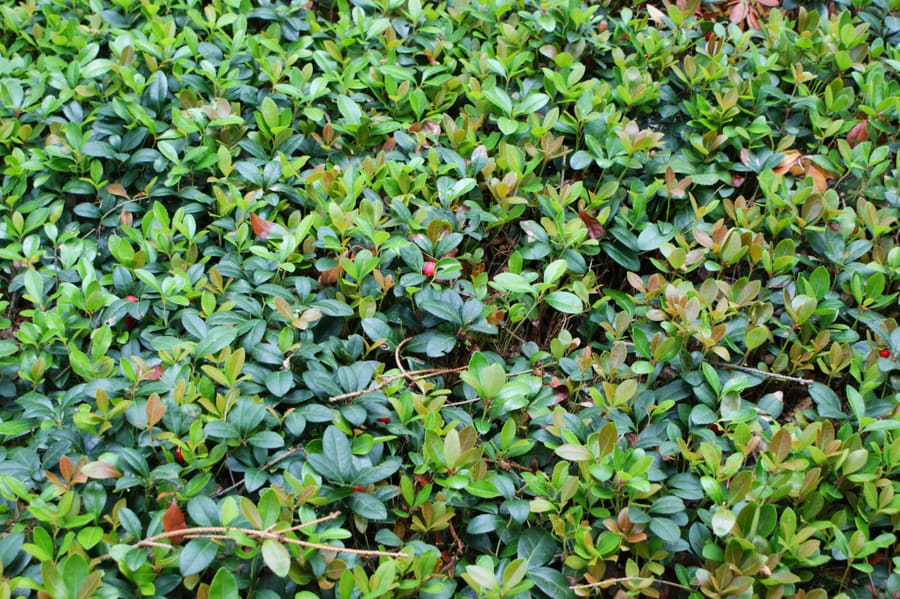 Wintergreen (Gaultheria procumbens)Not for self-dosing
Wintergreen (Gaultheria procumbens) is a low-lying evergreen shrub, reaching about 6 in (15 cm), with oval leathery leaves, small bell-shaped flowers, and bright red berries. It is known primarily for its oil, which contains methyl salicylate.