
Herb comparison
Coltsfoot (Tussilago farfara) vs Lungwort (Pulmonaria officinalis)
Both plants are listed as traditional remedies for 2 of the same conditions, which is why they are easy to confuse. Their descriptions and full safety notes are below, free.
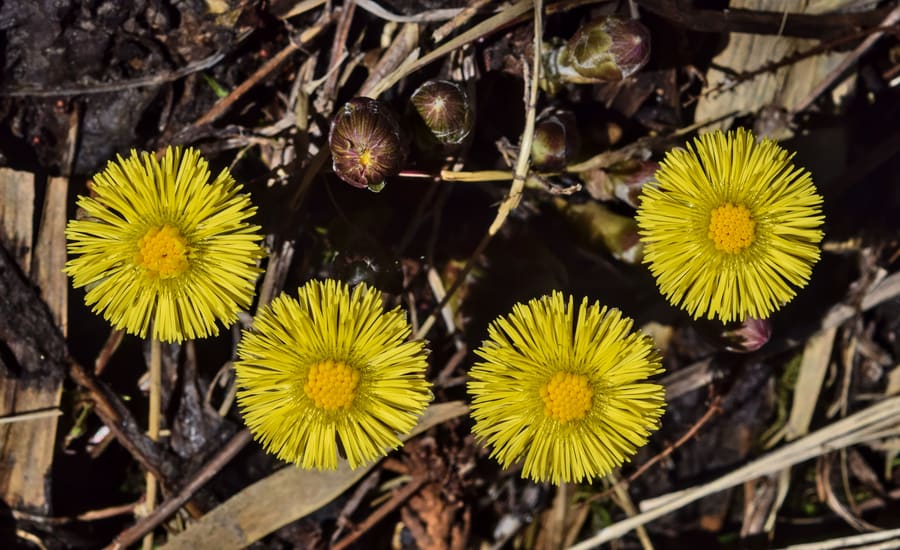
Coltsfoot (Tussilago farfara) is restricted
Preparation amounts are not shown for this herb. It is toxic, restricted, or otherwise unsafe to self-dose - the margin between a traditional dose and a harmful one is too small to publish as reference material. If you are considering it, that conversation belongs with a doctor or a qualified practitioner, not a website.
- About
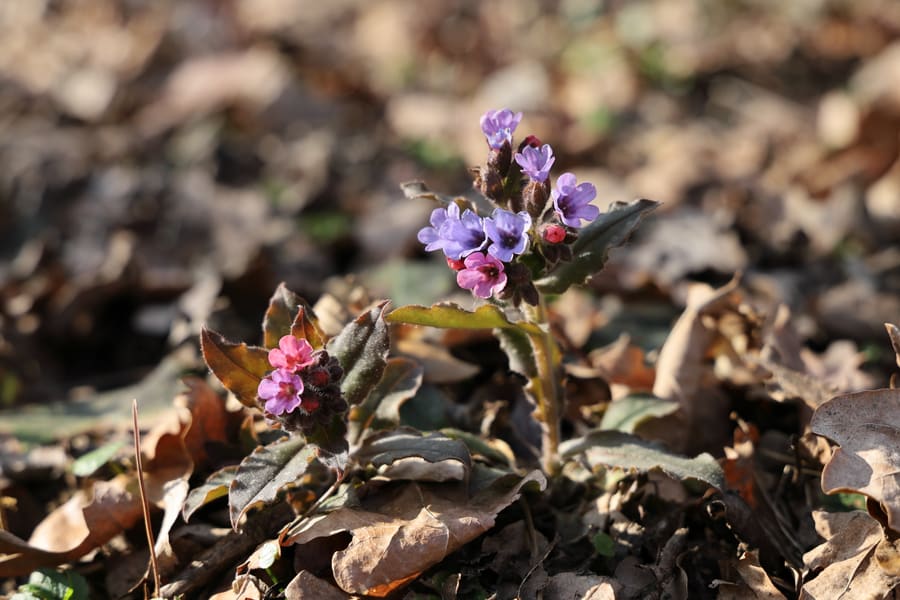
- Coltsfoot is a perennial herb growing to 12 inches with flowering stems covered in purple scales, yellow-gold flowers, and heart-shaped leaves. Indigenous to Europe and northern Asia and naturalized in North America, it is commonly found along roadsides, on verges, and in open areas. The flowers are gathered in late winter, and the leaves in summer.Lungwort is a perennial herb growing to 1 foot with broad oval basal leaves, smaller upper leaves mottled with white spots, and clusters of pink-purple flowers. Native to Europe and the Caucasus, it flourishes in mountain pastures and damp sites. The leaves are gathered in late spring. According to the medieval Doctrine of Signatures, which held that a plant's appearance pointed to the ailment it treated, lungwort got its name because its leaves were said to resemble lung tissue. This folk belief is not scientifically founded.
- Safety & precautions
- Liver toxicity: Coltsfoot contains pyrrolizidine alkaloids. LiverTox describes these compounds as able to cause sinusoidal obstruction syndrome, a serious form of liver injury, and in 2001 the U.S. FDA advised that supplements containing comfrey or other plants that supply these alkaloids be removed from the market. Do not take coltsfoot by mouth. Do not use it during pregnancy, when breastfeeding, or for children. Subject to legal restrictions in some countries.Subject to legal restrictions in some countries. Pyrrolizidine alkaloids, which can harm the liver, occur in the roots and are reported in smaller amounts in the leaves. Use only the leaves, not the roots, and ask a professional first.
Safety text above is printed in full and is never abbreviated. For each plant’s complete precautions, drug and food interactions and preparation notes, open its own page - both are free.
Conditions that list both
Related comparisons
- Bacopa (Bacopa monnieri) vs Coltsfoot (Tussilago farfara)
- Bacopa (Bacopa monnieri) vs Lungwort (Pulmonaria officinalis)
- Coltsfoot (Tussilago farfara) vs Elecampane (Inula helenium)
- Coltsfoot (Tussilago farfara) vs Hyssop (Hyssopus officinalis)
- Coltsfoot (Tussilago farfara) vs Lobelia (Lobelia inflata)
- Coltsfoot (Tussilago farfara) vs Mullein (Verbascum thapsus)