
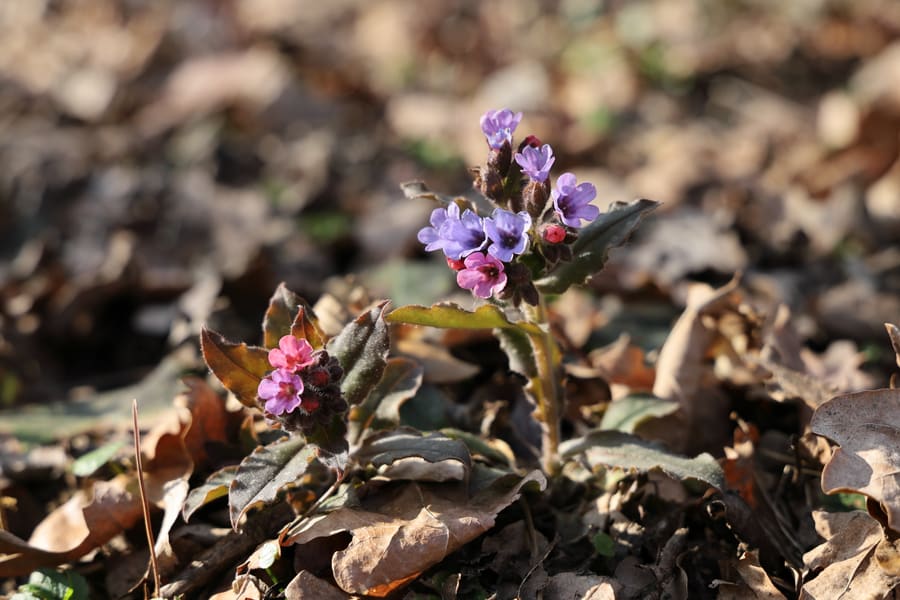
Lungwort (Pulmonaria officinalis)
Photo: Nefronus · CC BY-SA 4.0
- Head and Neck
- 4 conditions
- Licensed photo
Overview
Lungwort is a perennial herb growing to 1 foot with broad oval basal leaves, smaller upper leaves mottled with white spots, and clusters of pink-purple flowers. Native to Europe and the Caucasus, it flourishes in mountain pastures and damp sites. The leaves are gathered in late spring. According to the medieval Doctrine of Signatures, which held that a plant's appearance pointed to the ailment it treated, lungwort got its name because its leaves were said to resemble lung tissue. This folk belief is not scientifically founded.
Traditional uses & properties
It contains allantoin, flavonoids, tannins, mucilage and saponins.
Safety & precautions
Subject to legal restrictions in some countries. Pyrrolizidine alkaloids, which can harm the liver, occur in the roots and are reported in smaller amounts in the leaves. Use only the leaves, not the roots, and ask a professional first.
Educational reference only - not medical advice. Herbs can interact with medications. Consult a qualified healthcare provider before use. Full disclaimer.
Drug interactions
Interaction data is not available for this herb - talk to a pharmacist before combining it with any medication. A blank entry here means we have not documented interactions, not that none exist.
Habitat
Native to Europe and the Caucasus. Flourishes in mountain pastures and damp sites. The leaves are gathered in late spring.
Traditionally used for
- Strep Throat10 herbs · 2 free
- Asthma14 herbs · 2 free
- Bronchitis17 herbs · 2 free
- Wound healing7 herbs · 2 free
Each condition shows its first 2 remedies free. Premium opens the full remedy list for every condition - or come back for the free Condition of the Day.
Frequently asked questions
What is Lungwort (Pulmonaria officinalis) traditionally used for?
Traditional sources describe Lungwort (Pulmonaria officinalis) as follows: It contains allantoin, flavonoids, tannins, mucilage and saponins.
What safety cautions apply to Lungwort (Pulmonaria officinalis)?
Subject to legal restrictions in some countries. Pyrrolizidine alkaloids, which can harm the liver, occur in the roots and are reported in smaller amounts in the leaves. Use only the leaves, not the roots, and ask a professional first.
Related herbs
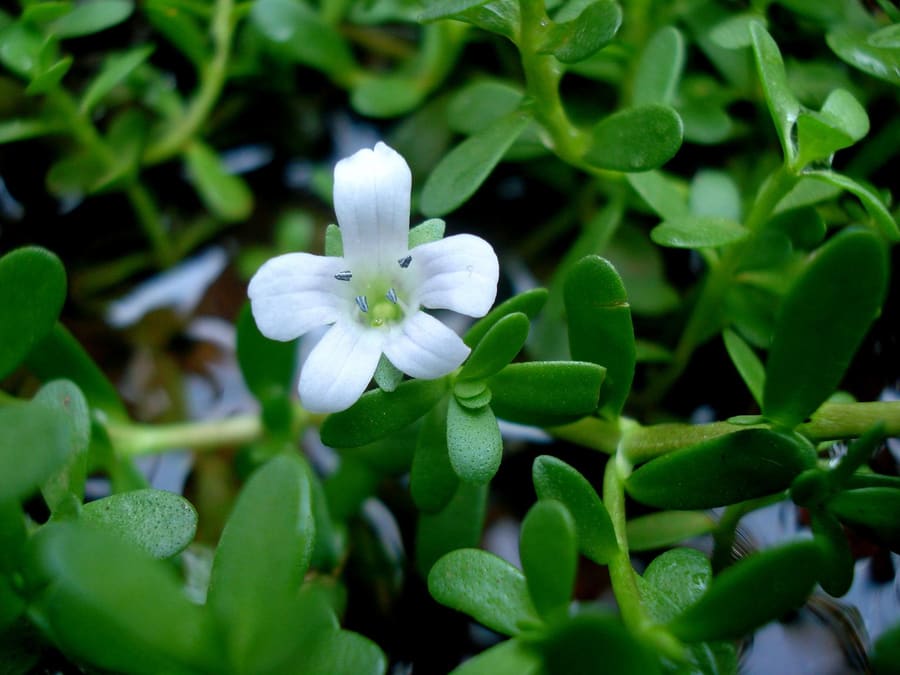 Bacopa (Bacopa monnieri)
Bacopa, also known as Water Hyssop or Brahmi, is a creeping succulent perennial that can grow to about 20 inches. It features spatula-shaped fleshy leaves and pale blue or white flowers on slender stalks. It thrives in marshlands and along the edges of mangrove swamps in warmer temperate and tropical climates, especially southern Asia, where it forms dense mats on mudflats.
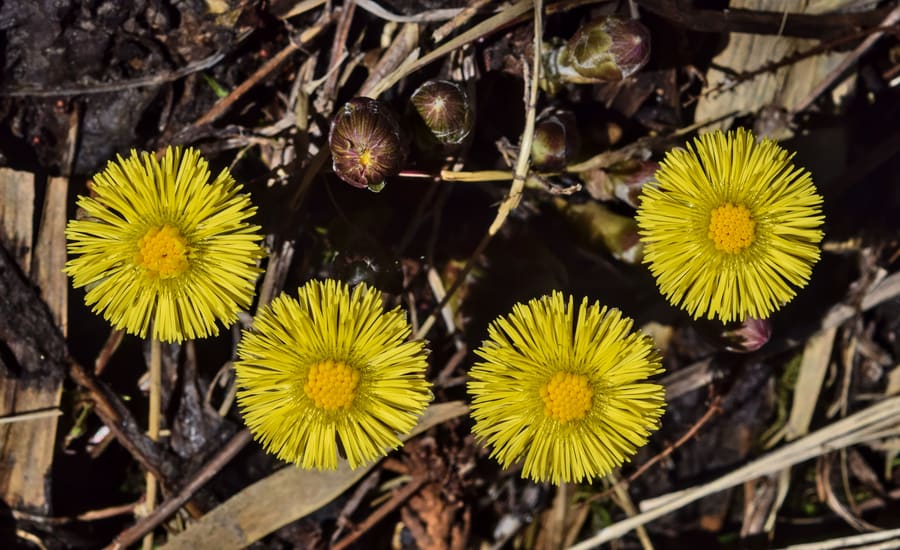 Coltsfoot (Tussilago farfara)Not for self-dosing
Coltsfoot is a perennial herb growing to 12 inches with flowering stems covered in purple scales, yellow-gold flowers, and heart-shaped leaves. Indigenous to Europe and northern Asia and naturalized in North America, it is commonly found along roadsides, on verges, and in open areas. The flowers are gathered in late winter, and the leaves in summer.
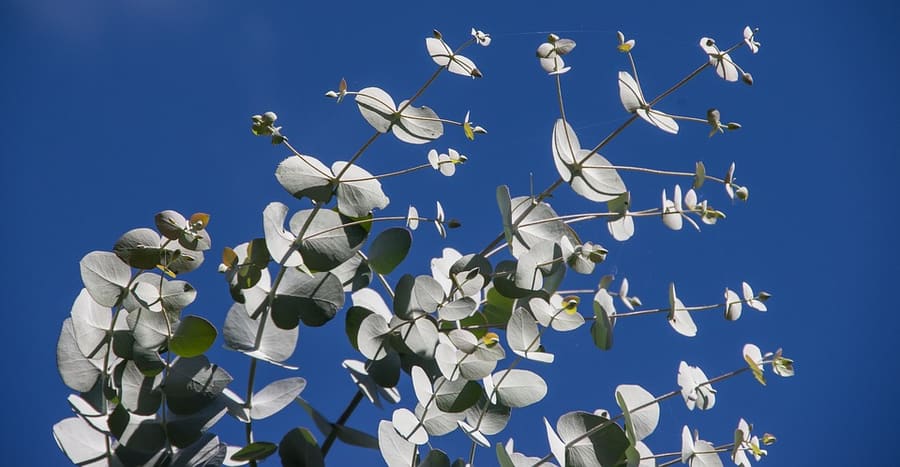 Eucalyptus (Eucalyptus globulus)
For many people the scent of eucalyptus conjures up days spent in bed during childhood with eucalyptus and other oils smothered on the chest. Eucalyptus is a common ingredient in many over-the-counter cold remedies.
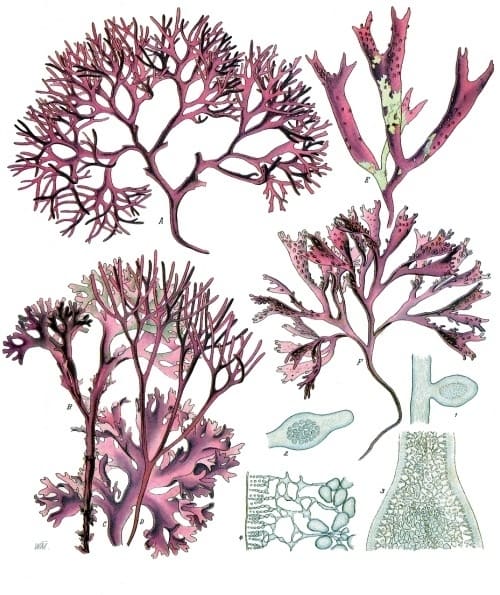 Irish Moss (Chondrus crispus)
Irish moss is a reddish-brown seaweed growing to 10 inches, with a flat, forked plant body and fan-shaped outline. Found on the Atlantic coasts of Europe and North America, it grows just below the waterline, attached to rocks and stones. In summer in North America and in autumn in Ireland, it is pulled up by hand or with a rake at low tide and dried in the sun. This seaweed is used extensively in the food and pharmaceutical industries as an emulsifying and binding agent, appearing in products such as toothpastes. Its polysaccharides become jelly-like when immersed in water, which makes it useful as a food ingredient.
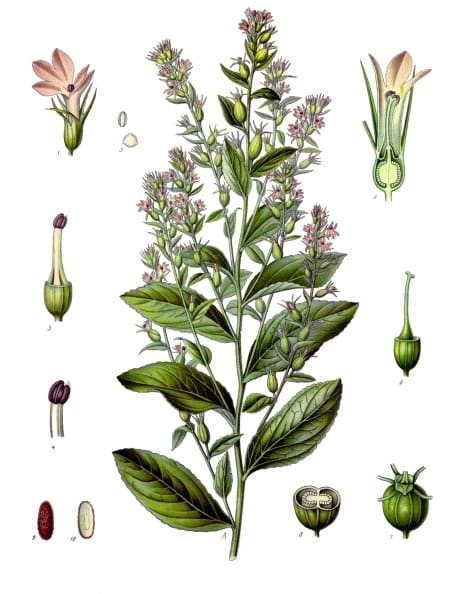 Lobelia (Lobelia inflata)Not for self-dosing
Lobelia is an annual herb growing to 20 inches with lance-shaped leaves and pale blue, pink-tinged flowers. It was used as a 'puke weed' to induce vomiting. Lobelia was also smoked as a substitute for tobacco and was reputed to share some of its magical qualities. Indigenous to North America, especially eastern parts of the United States, it grows by roadsides and in neglected areas, preferring acid soil. The aerial parts are harvested in early autumn when the seed capsules are most numerous and are carefully dried. Its use was later championed by the American herbalist Samuel Thomson (1769-1843), who made the herb the mainstay of his therapeutic system, mainly using it to induce vomiting.
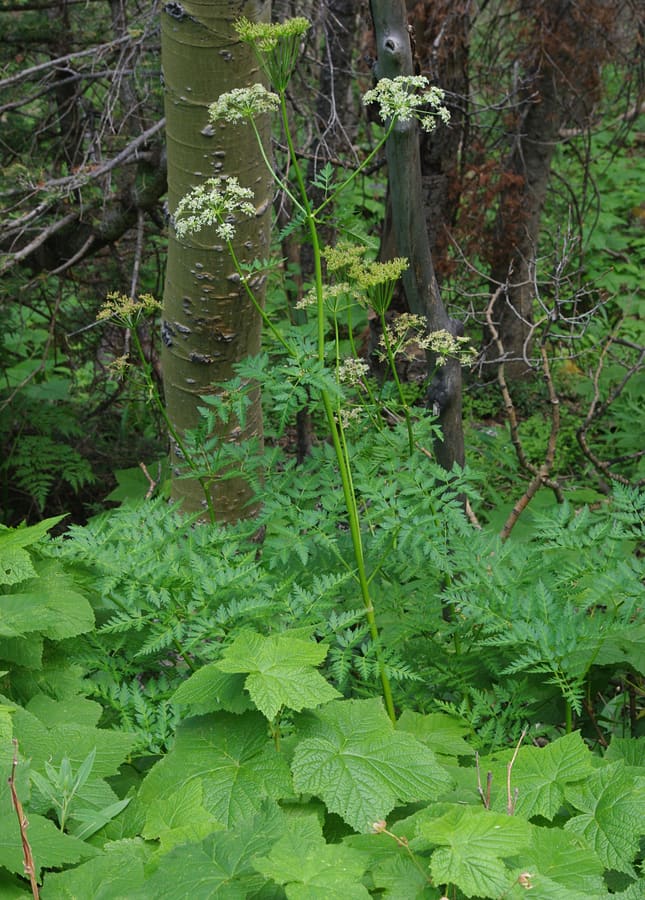 Osha (Ligusticum porteri)
Osha has been overharvested in the wild and is extremely difficult to cultivate. It is listed on the United Plant Savers at-risk list. Until wild populations stabilize, its use should be limited.
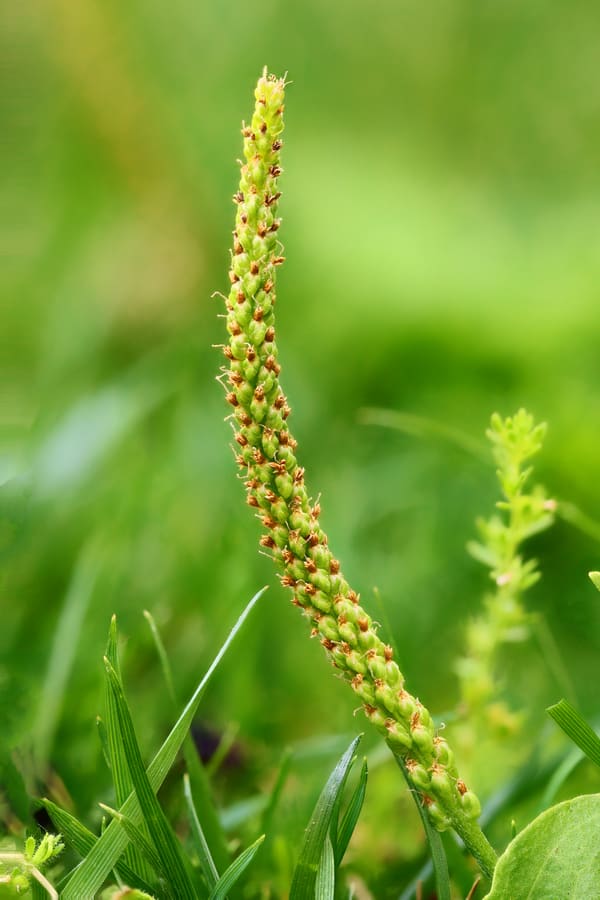 Plantain (Plantago major)
Common plantain (Plantago major) is a low-growing perennial reaching up to about 10 in (25 cm), forming a rosette of broad, ribbed leaves and spikes of tiny green flowers. Often regarded as a garden weed, plantain has leaves rich in iridoids, flavonoids, mucilage and tannins.
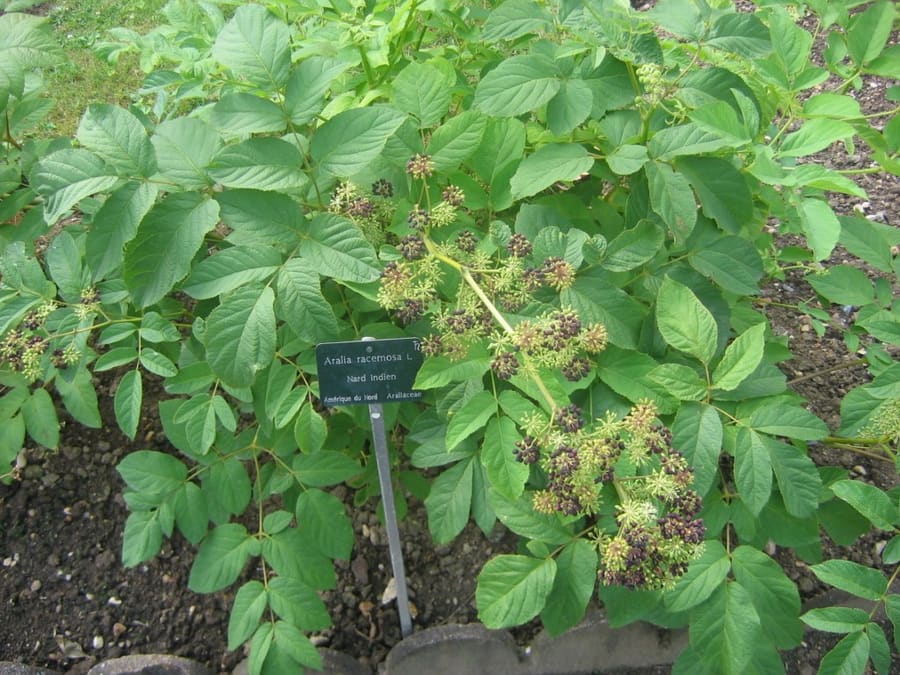 Spikenard (Aralia racemosa)
American spikenard (Aralia racemosa) is a tall, aromatic perennial bush up to about 6½ ft (2 m), with fleshy roots, large compound leaves, and clusters of greenish-white flowers followed by red or purple berries.