
Herb comparison
Arjun (Terminalia arjuna) vs Guggul (Commiphora mukul)
Both plants are listed as traditional remedies for 1 of the same condition, which is why they are easy to confuse. Their descriptions and full safety notes are below, free.
- About
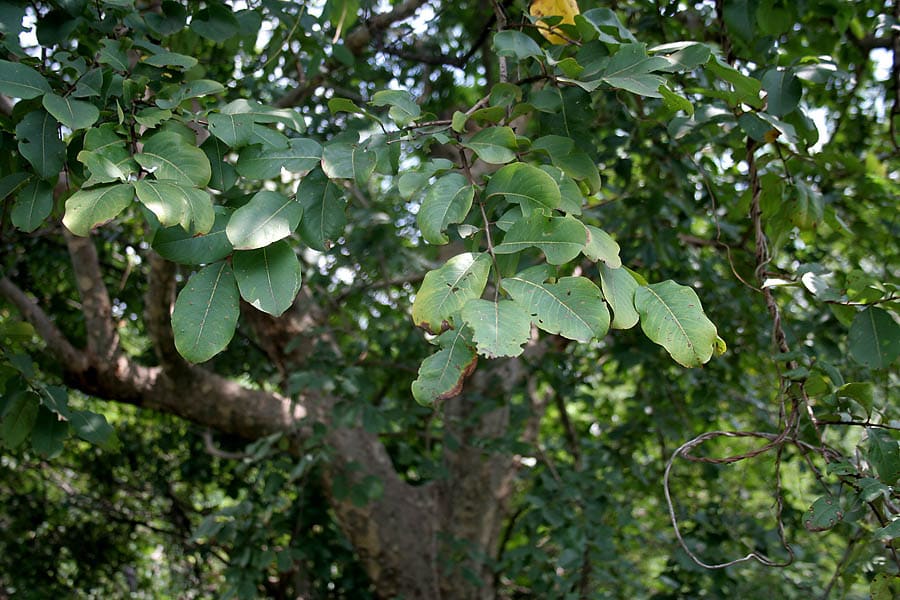
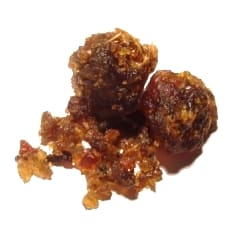
- Arjun is an evergreen tree that can grow up to about 100 ft (30 m) high, bearing pale yellow flowers and cone-shaped leaves.Guggul is a spiny shrub or tree growing to 6.5 feet with oval, serrated leaves, brownish-red flowers, and red fruits. The gum resin obtained from the bark forms pale yellow to brown 'tears' on the stems. Thriving in dry, semi-arid, and desert environments across much of the Indian subcontinent and the Middle East, it has been valued in Ayurvedic medicine for millennia. Guggul has been used in Ayurvedic medicine for centuries, and it has been studied for raised blood cholesterol; MSK says evidence is lacking for weight loss, studies on cholesterol are mixed, and one study suggests it may raise cholesterol.
- Safety & precautions
- Not recommended during pregnancy unless supervised by a qualified healthcare professional. Owing to conflicting research on how it affects blood pressure and heart rate, it should be taken only with professional guidance.Avoid if breastfeeding. Because it thins the blood, do not use in persons who bleed easily or during pregnancy. Avoid with hyperthyroid disorders. Medicines: In a small study in healthy volunteers, a single dose of gugulipid lowered blood levels of propranolol and diltiazem, which could make those drugs less effective. Laboratory studies summarized by MSK suggest guggul induces the enzyme CYP3A4, which could lower levels of other medicines processed by it. Ask a pharmacist before combining guggul with prescription drugs.
Safety text above is printed in full and is never abbreviated. For each plant’s complete precautions, drug and food interactions and preparation notes, open its own page - both are free.
Conditions that list both
Related comparisons
- Aloe (Aloe vera) vs Guggul (Commiphora mukul)
- Arjun (Terminalia arjuna) vs Dan Shen (Salvia miltiorrhiza)
- Arjun (Terminalia arjuna) vs Fenugreek (Trigonella foenum-graecum)
- Arjun (Terminalia arjuna) vs Fo Ti (Polygonum multiflorum)
- Arjun (Terminalia arjuna) vs Hawthorn (Crataegus oxyacantha)
- Arjun (Terminalia arjuna) vs Visnaga (Ammi visnaga)