
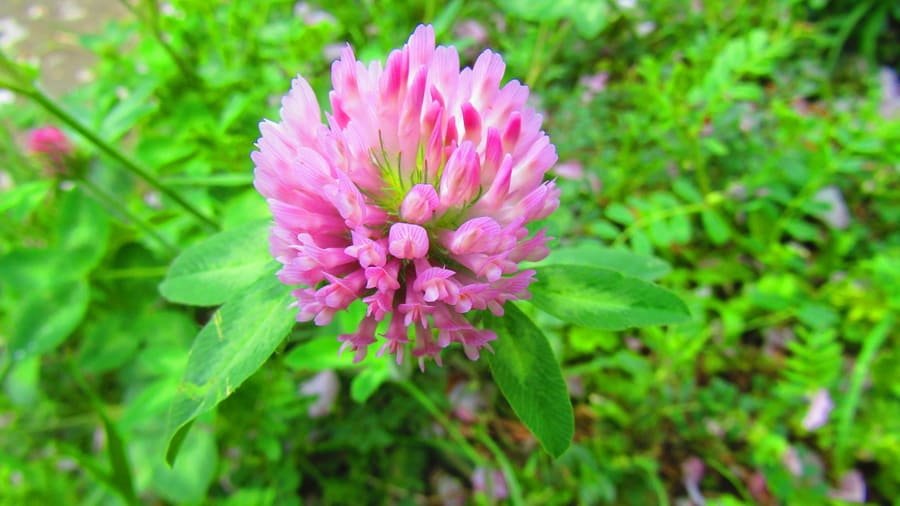
Red Clover (Trifolium pratense)
Photo: Dandy1022 · CC BY-SA 4.0
- Female Reproductive
- 1 condition
- Licensed photo
Overview
Red clover (Trifolium pratense) is a perennial legume about 16 in (40 cm) tall, with trifoliate leaves bearing a white crescent and pink-purple egg-shaped flowerheads. It is rich in isoflavones (phytoestrogens) and is traditionally used for skin conditions such as eczema and psoriasis and for whooping cough, while isoflavone extracts are promoted for menopausal symptoms. NCCIH says research hasn't shown conclusive benefits for any health condition, and studies on hot flashes have been inconsistent.
Traditional uses & properties
Skin (traditional use): MSK says red clover is traditionally used for eczema and psoriasis; NCCIH says research has not shown conclusive benefits for any health condition. Phytoestrogenic: Its isoflavones act as plant estrogens, and MSK advises talking to a clinician first if you have a hormone-sensitive cancer, as red clover may worsen it. Cough (traditional use): Traditionally used for whooping cough; MSK notes that red clover has other uses that have not been studied to see if they work. Constituents: Contains vitamins, minerals, and flavonoids.
Safety & precautions
Pregnancy: MSK advises avoiding red clover during pregnancy and breastfeeding, and NCCIH says supplements may be unsafe then. Blood Thinners: MSK says red clover may increase the risk of bleeding in people taking blood thinners such as warfarin, so talk with a healthcare provider first.
Educational reference only - not medical advice. Herbs can interact with medications. Consult a qualified healthcare provider before use. Full disclaimer.
Drug interactions
Evidence is limited to one case report, preclinical studies and a review of possible warfarin interactions. [1, 2]
- Methotrexate
- A 2013 case report described a woman on methotrexate injections who developed severe vomiting and stomach pain, symptoms that pointed to methotrexate toxicity, after starting red clover. She recovered once the red clover was stopped. [1, 2]
- Blood thinners and antiplatelet drugs
- MSK cites preclinical studies suggesting red clover may strengthen these drugs, and a 2000 review lists red clover among herbs that could, in theory, raise bleeding risk with warfarin. [2, 3]
- Medicines broken down by liver enzymes
- Preclinical studies suggest red clover inhibits several CYP enzymes. Relevance is unknown. [2]
How to read this section: each entry is HerbMate's summary of what the cited sources report. Words such as "may", "theoretical" or "in laboratory or animal studies" mean the effect has not been confirmed in people, and "case report" means it was seen in one or a few patients. A medicine that is not listed here has not been shown to be safe with this herb. The numbers in brackets link to the sources at the foot of the page.
Habitat
Originally from Europe and Asia, red clover is cultivated globally as fodder and a nitrogen-fixing crop. The flowerheads are gathered in summer once they fully open.
Sources
The interaction notes and the statements on this page that name a source were written by HerbMate from these references, which were last checked in October 2026. They are summaries, not medical advice; ask a pharmacist about your own medicines.
- Orr A, Parker R. Red clover causing symptoms suggestive of methotrexate toxicity in a patient on high-dose methotrexate. Menopause Int, 2013 (PubMed 24072635)
- Memorial Sloan Kettering, About Herbs: Red Clover
- Heck AM, et al. Potential interactions between alternative therapies and warfarin. Am J Health Syst Pharm, 2000 (PubMed 10902065)
- NCCIH (NIH): Red Clover
Traditionally used for
Each condition shows its first 2 remedies free. Premium opens the full remedy list for every condition - or come back for the free Condition of the Day.
Frequently asked questions
What is Red Clover (Trifolium pratense) traditionally used for?
Traditional sources describe Red Clover (Trifolium pratense) as follows: Skin (traditional use): MSK says red clover is traditionally used for eczema and psoriasis; NCCIH says research has not shown conclusive benefits for any health condition. Phytoestrogenic: Its isoflavones act as plant estrogens, and MSK advises talking to a clinician first if you have a hormone-sensitive cancer, as red clover may worsen it. Cough (traditional use): Traditionally used for whooping cough; MSK notes that red clover has other uses that have not been studied to see if they work. Constituents: Contains vitamins, minerals, and flavonoids.
What safety cautions apply to Red Clover (Trifolium pratense)?
Pregnancy: MSK advises avoiding red clover during pregnancy and breastfeeding, and NCCIH says supplements may be unsafe then. Blood Thinners: MSK says red clover may increase the risk of bleeding in people taking blood thinners such as warfarin, so talk with a healthcare provider first.
Related herbs
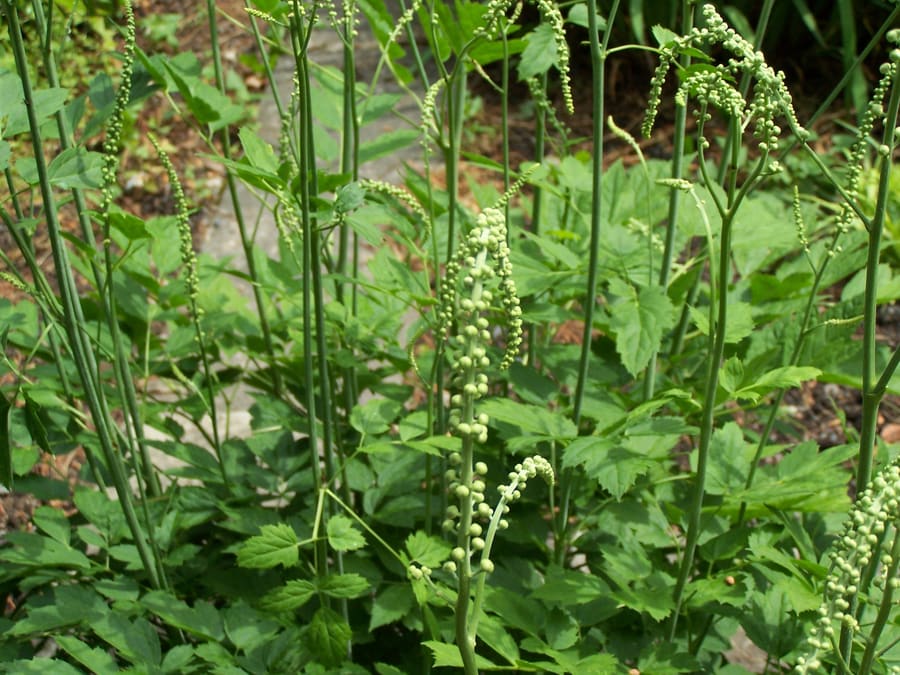 Black Cohosh (Cimicifuga racemosa)
Black cohosh (Cimicifuga racemosa) is a tall herbaceous perennial, growing up to about 8 ft (2.5 m) with creamy-white flower spikes. Its thick, knobby root has a bitter, acrid taste and a distinctive odor. Native Americans used the root for a variety of conditions, including menstrual cramps, kidney ailments and sore throat; NCCIH says research has focused on menopause symptoms, and there aren't enough reliable data on other uses.
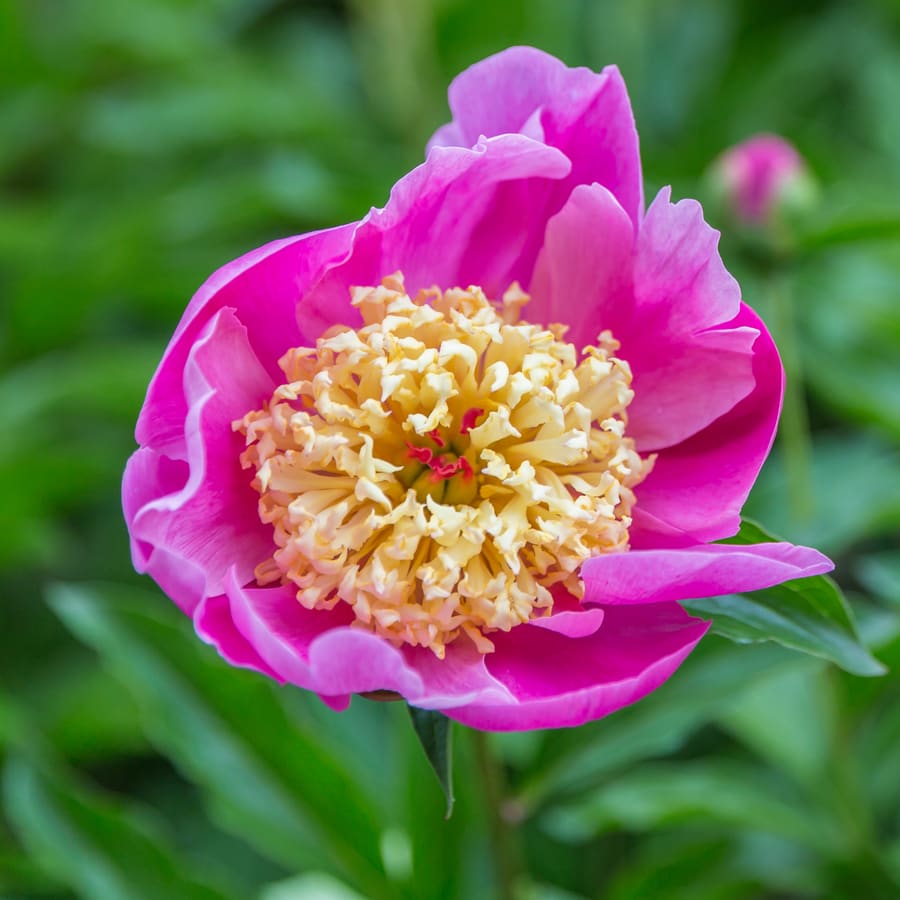 Chinese Peony / White Peony (Paeonia lactiflora)
White peony is an upright perennial growing to 6.5 feet with large white flowers and divided, dark green leaves. Its history of use in China stretches back at least 1,500 years, and it is one of the herbs in 'Four Things Soup.' The plant is cultivated throughout northeastern China and Inner Mongolia, propagated from seed in spring or from root cuttings in winter. The root of 4- or 5-year-old plants is harvested in spring or autumn.
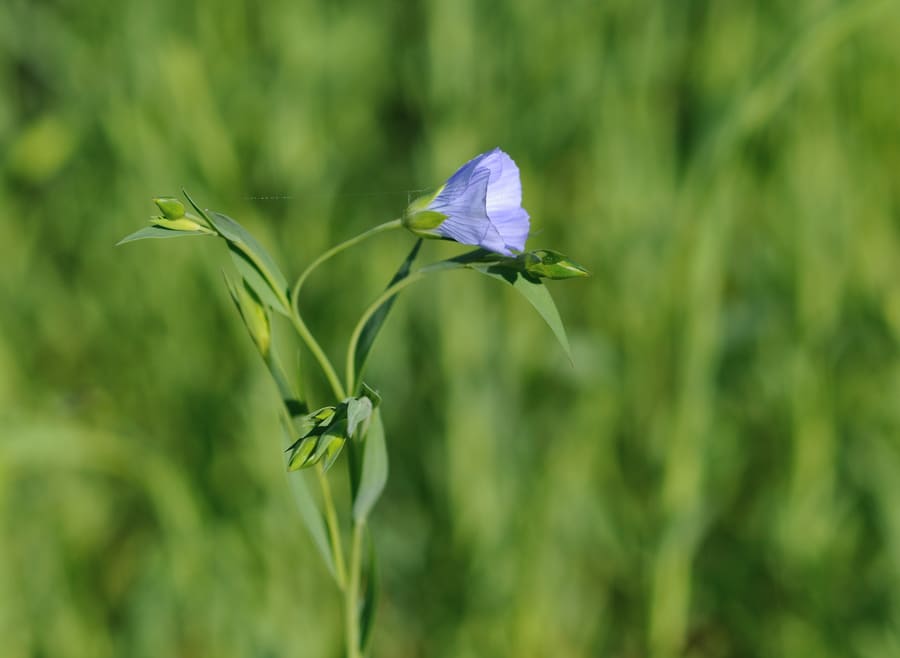 Flaxseed (Linum usitatissimum)
Flaxseed (Linum usitatissimum), also called linseed, is a slender annual plant growing up to about 3 ft (1 m). It produces narrow leaves, delicate blue flowers, and spherical seed capsules containing shiny, flat seeds. Long cultivated in the Middle East and beyond, flaxseeds are rich in fatty acids (particularly alpha-linolenic acid), protein, fiber, mucilage, and lignans (phytoestrogens). Flaxseed and flaxseed oil supplements are promoted for the heart, brain and immune system, although NCCIH describes the research on them as being of varying quality.
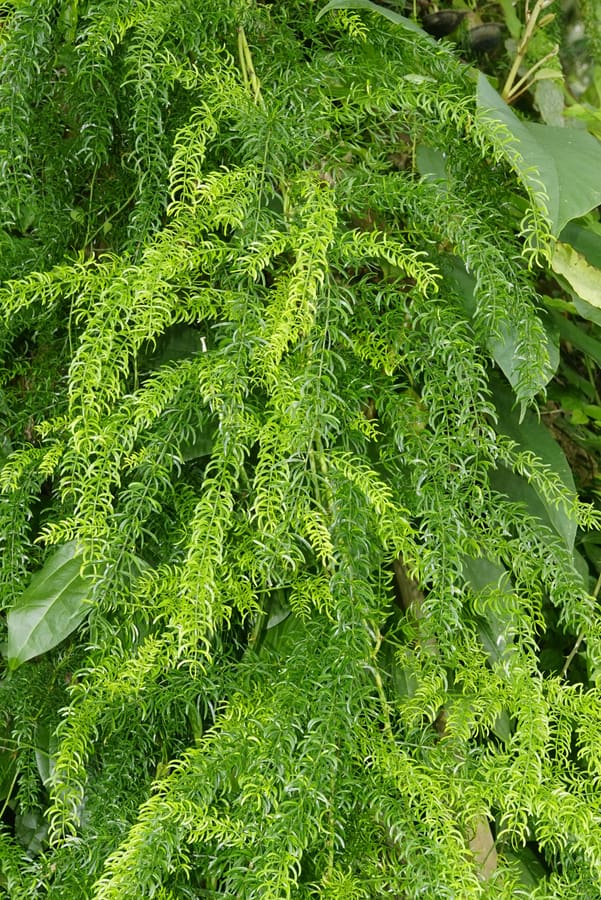 Shatavari (Asparagus racemosus)
Shatavari is a slender perennial fern that can grow up to 23 feet in height, featuring fronds of needle-like leaves, tiny white flowers, and purple-black berries. In Ayurvedic medicine it is called the 'Queen of herbs', and its name is often translated as '100 spouses'. The root is the medicinal part used. Native to the Himalayas and Indian subcontinent, it grows wild in gravelly soils up to 3,900 feet above sea level and is also found in western China.