
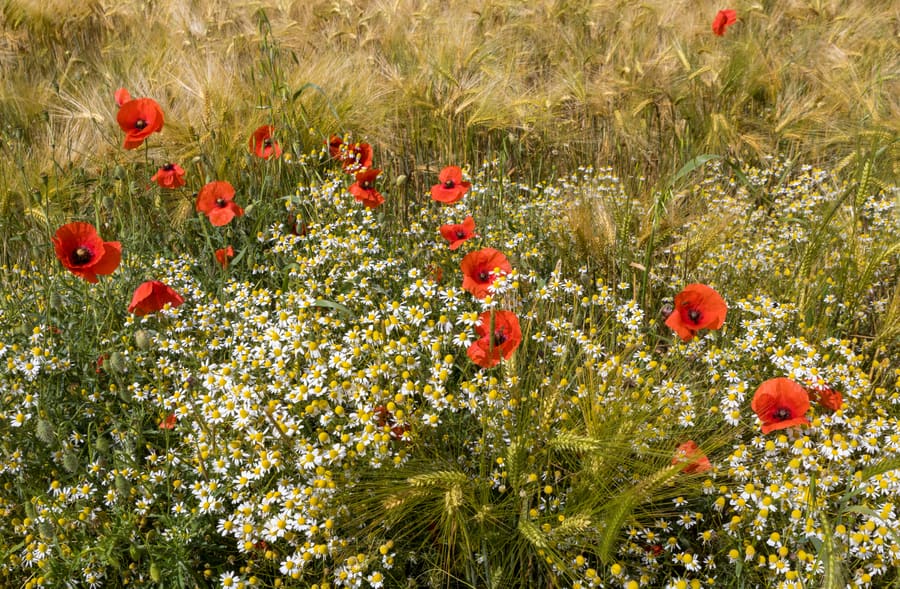
German Chamomile (Chamomilla recutita)
Photo: JackyM59 · CC BY-SA 4.0
- Digestive
- 1 condition
- Licensed photo
Overview
German chamomile (Matricaria recutita) is a sweetly aromatic annual, growing to about 2 ft (60 cm), featuring finely cut leaves and small, daisy-like flower heads with white petals and a yellow center. It has a slightly bitter, apple-like taste. It is promoted today for indigestion, anxiety, insomnia and other conditions and used on the skin for some skin conditions; NCCIH says studies have not produced enough reliable evidence to rate its usefulness for specific conditions.
Traditional uses & properties
Digestion: Promoted today for indigestion; NCCIH says studies have not produced enough reliable evidence to rate its usefulness. It is also promoted for infant colic, but NCCIH says chamomile alone has not been shown to help colic. Nervine: Promoted today for anxiety and insomnia; NCCIH says preliminary studies suggest a chamomile supplement might help generalized anxiety disorder, but there is very little information on insomnia.
Safety & precautions
Allergies: Some individuals may experience allergic reactions (e.g., dermatitis) more often than with many other herbs. Essential Oil: Avoid internal use unless professionally supervised; do not use topically during pregnancy. Blood-Thinning Medications: Seek professional guidance if also taking anticoagulants. Children: Ask a professional before giving it to children.
Educational reference only - not medical advice. Herbs can interact with medications. Consult a qualified healthcare provider before use. Full disclaimer.
Drug interactions
Reported interactions involve warfarin and some drugs processed by the liver; others are theoretical. [1]
- Warfarin and antiplatelet drugs
- NCCIH notes reported interactions with warfarin. MSK links a possible added anticoagulant effect to chamomile's coumarin content, and a 2021 systematic review lists chamomile tea among items associated with higher bleeding risk on warfarin. [1, 2, 3]
- Sedatives
- A theoretical interaction according to NCCIH; MSK says chamomile may strengthen sedatives. [1, 2]
- Birth control pills
- NCCIH notes preliminary studies suggesting chamomile might reduce their effect. [1]
How to read this section: each entry is HerbMate's summary of what the cited sources report. Words such as "may", "theoretical" or "in laboratory or animal studies" mean the effect has not been confirmed in people, and "case report" means it was seen in one or a few patients. A medicine that is not listed here has not been shown to be safe with this herb. The numbers in brackets link to the sources at the foot of the page.
Habitat
Found throughout much of Europe and other temperate areas, German chamomile seeds are sown in spring or autumn. The flower heads, which contain the highest concentration of active constituents, are harvested in summer at full bloom.
Sources
The interaction notes and the statements on this page that name a source were written by HerbMate from these references, which were last checked in October 2026. They are summaries, not medical advice; ask a pharmacist about your own medicines.
Traditionally used for
Each condition shows its first 2 remedies free. Premium opens the full remedy list for every condition - or come back for the free Condition of the Day.
Frequently asked questions
What is German Chamomile (Chamomilla recutita) traditionally used for?
Traditional sources describe German Chamomile (Chamomilla recutita) as follows: Digestion: Promoted today for indigestion; NCCIH says studies have not produced enough reliable evidence to rate its usefulness. It is also promoted for infant colic, but NCCIH says chamomile alone has not been shown to help colic. Nervine: Promoted today for anxiety and insomnia; NCCIH says preliminary studies suggest a chamomile supplement might help generalized anxiety disorder, but there is very little information on insomnia.
What safety cautions apply to German Chamomile (Chamomilla recutita)?
Allergies: Some individuals may experience allergic reactions (e.g., dermatitis) more often than with many other herbs. Essential Oil: Avoid internal use unless professionally supervised; do not use topically during pregnancy. Blood-Thinning Medications: Seek professional guidance if also taking anticoagulants. Children: Ask a professional before giving it to children.
Related herbs
 Caraway (Carum carvi)
Caraway is an aromatic annual herb growing to 2 feet with a ridged stem, feathery leaves, and umbels of white flowers in midsummer. Exploding capsules release two small narrow seeds. It grows wild in Europe, North Africa, and Asia, preferring sunny sites up to 6,600 feet above sea level. Cultivated in Europe, Russia, North Africa, and the United States, the seeds are harvested ripe in late summer. The seeds are commonly used in cooking.
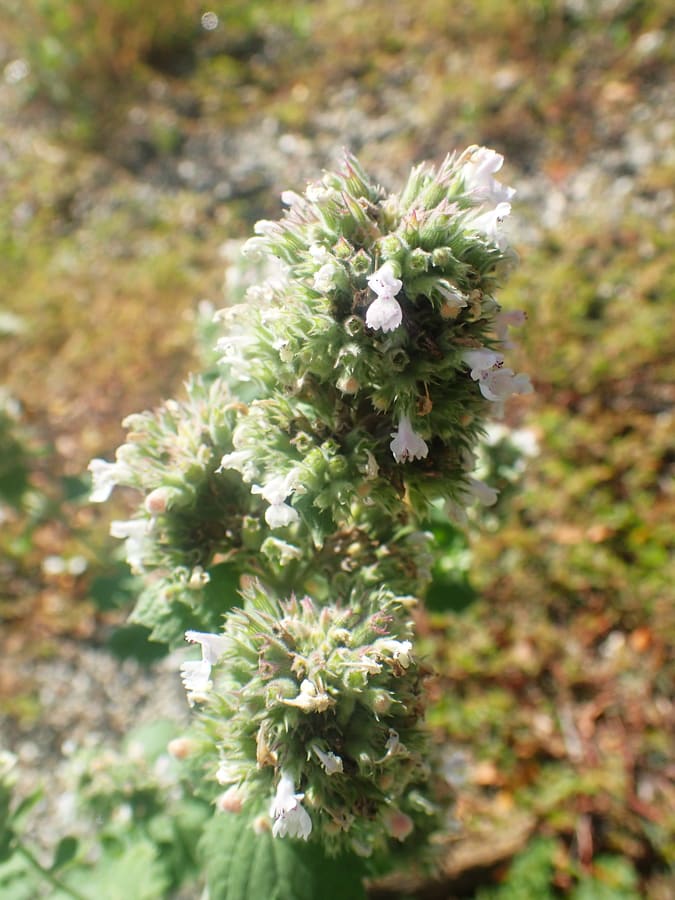 Catnip (Nepeta cataria)
Catnip is a downy, aromatic perennial growing to 3 feet with heart-shaped, gray-green leaves and whorls of white flowers marked with purple spots. Native to Europe and naturalized in North America, it grows in dry wayside places and mountainous regions up to altitudes of 5,000 feet. The plant is gathered when in flower during summer and autumn. Catnip has an excitatory effect on cats.
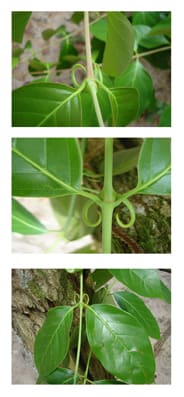 Cat's Claw (Uncaria tomentosa)
Cat's claw is a climbing vine that can grow to 100 feet or more, with stems up to 8 inches in diameter, large glossy leaves, and sharp hooks resembling a cat's claws. Native to tropical rainforests in the central and eastern Andes, especially Peru, Ecuador, and Colombia, it has also been found in Guatemala, Costa Rica, and Panama. Indigenous people of the Amazon rainforest have used cat's claw for centuries to ward off disease, and NCCIH says it is promoted today for osteoarthritis, rheumatoid arthritis, cancer and viral infections. NCCIH says there is no conclusive evidence from studies in people to support cat's claw for any health purpose. By the early 1990s, over-collection from the wild threatened the species' survival; only sustainably sourced stem bark should be used, rather than root bark.
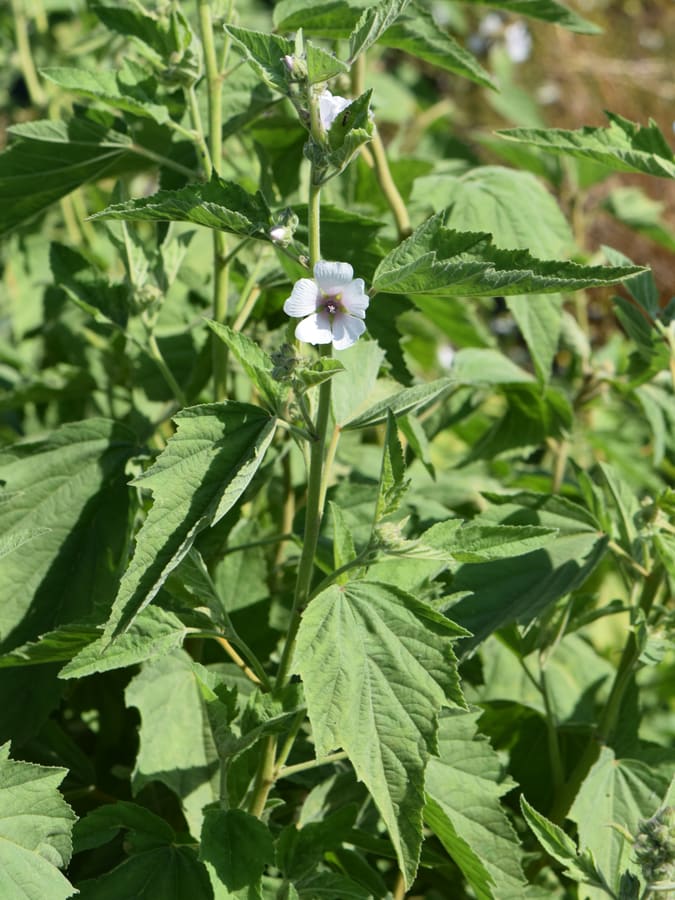 Marshmallow (Althaea officinalis)
Marshmallow (Althaea officinalis) is a downy perennial up to about 7 ft (2.2 m), with thick white roots, heart-shaped leaves, and pink flowers. It is known for its high mucilage content.
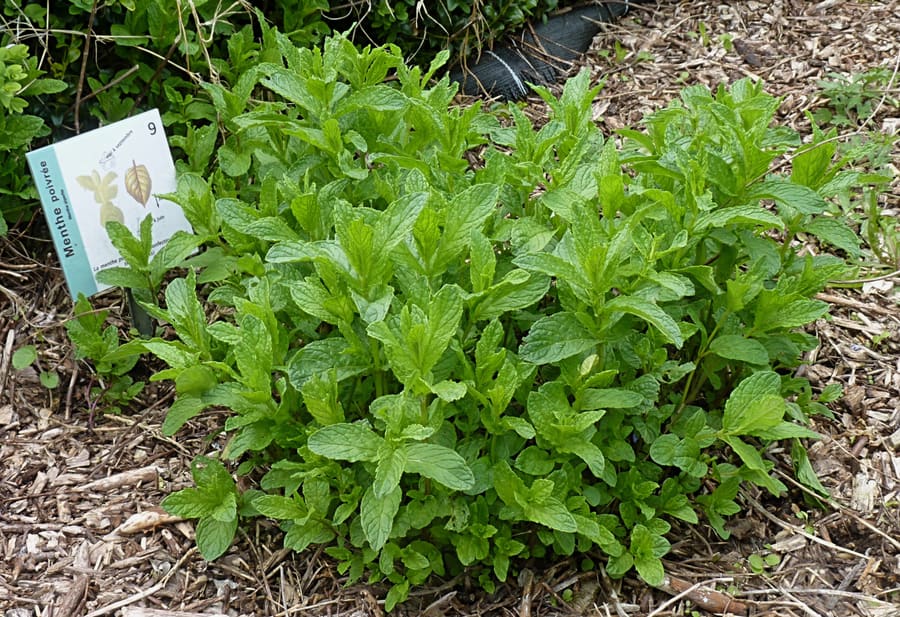 Peppermint (Mentha x piperita)
Peppermint (Mentha × piperita) is a fast-growing, square-stemmed herb (commonly about 32 in / 80 cm tall), with lanceolate, serrated leaves and purplish flowers. A natural hybrid of watermint and spearmint, peppermint is renowned for its cooling, aromatic flavor, and mint plants have been used for digestive disorders since ancient Greece, Rome and Egypt. NCCIH says a small amount of research suggests enteric-coated peppermint oil capsules may improve IBS symptoms in adults, but there is not enough evidence to know whether peppermint leaf helps any condition.
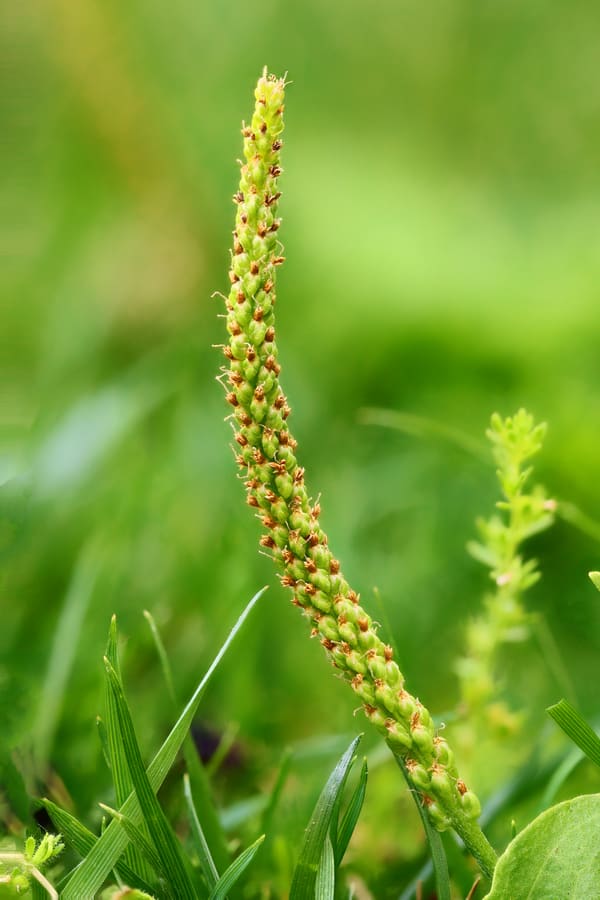 Plantain (Plantago major)
Common plantain (Plantago major) is a low-growing perennial reaching up to about 10 in (25 cm), forming a rosette of broad, ribbed leaves and spikes of tiny green flowers. Often regarded as a garden weed, plantain has leaves rich in iridoids, flavonoids, mucilage and tannins.
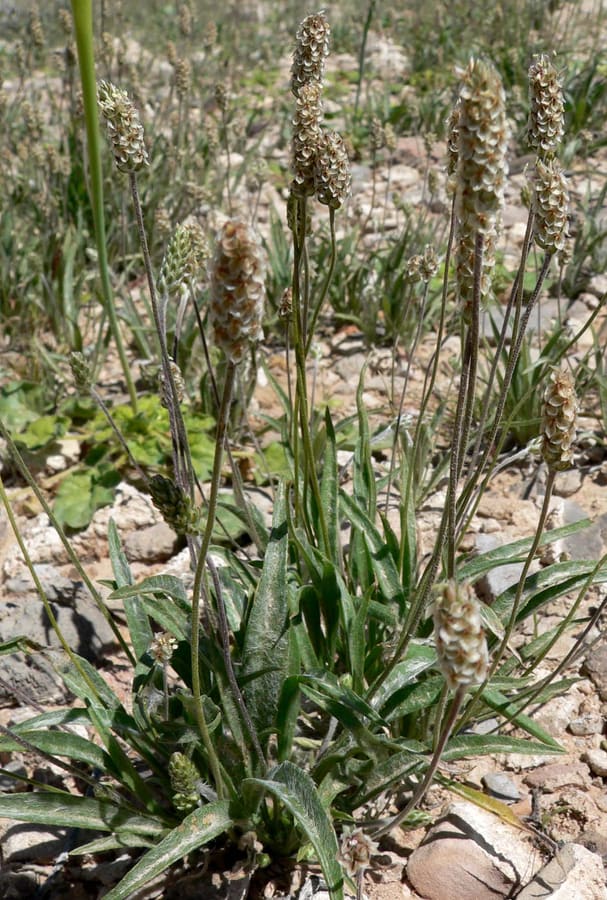 Psyllium (Plantago ovata)
Psyllium, also known as flea seed due to its small brown appearance, is produced by several Plantago species. It has long been used as a laxative, and MedlinePlus lists it as a bulk-forming laxative used to treat constipation. The seeds and husks have a bland taste and develop a jellylike consistency when moistened due to their high mucilage content. The plants are extensively cultivated, especially in India, and propagated from seed in spring. Seeds are harvested when ripe in late summer and early autumn.
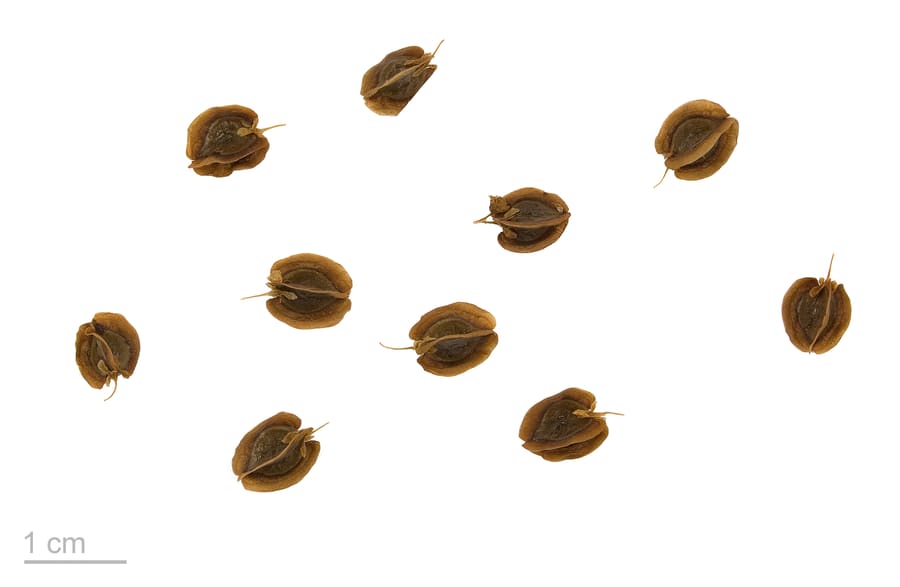 Chinese Rhubarb (Rheum palmatum)
Chinese rhubarb (Rheum palmatum) is a thick-rhizomed perennial, growing up to 10 ft (3 m) tall, with large, palmate leaves and small flowers. It has been used in Chinese medicine for over 2,000 years.