

Caraway (Carum carvi)
Photo: Harris & Ewing / Adam Cuerden · Public domain
- Digestive
- 4 conditions
- Licensed photo
Overview
Caraway is an aromatic annual herb growing to 2 feet with a ridged stem, feathery leaves, and umbels of white flowers in midsummer. Exploding capsules release two small narrow seeds. It grows wild in Europe, North Africa, and Asia, preferring sunny sites up to 6,600 feet above sea level. Cultivated in Europe, Russia, North Africa, and the United States, the seeds are harvested ripe in late summer. The seeds are commonly used in cooking.
Traditional uses & properties
Its volatile oil is high in carvone and limonene.
Safety & precautions
Do not use the essential oil internally except under professional supervision.
Educational reference only - not medical advice. Herbs can interact with medications. Consult a qualified healthcare provider before use. Full disclaimer.
Drug interactions
Interaction data is not available for this herb - talk to a pharmacist before combining it with any medication. A blank entry here means we have not documented interactions, not that none exist.
Habitat
Caraway grows wild in Europe, North Africa, and Asia, preferring sunny sites up to 6,600 feet above sea level. It is cultivated in Europe, Russia, North Africa, and the United States. Seeds are harvested ripe in late summer.
Traditionally used for
- Indigestion24 herbs · 2 free
- Irritable Bowel Syndrome11 herbs · 2 free
- Menstrual Pain11 herbs · 2 free
- Bronchitis17 herbs · 2 free
Each condition shows its first 2 remedies free. Premium opens the full remedy list for every condition - or come back for the free Condition of the Day.
Frequently asked questions
What is Caraway (Carum carvi) traditionally used for?
Traditional sources describe Caraway (Carum carvi) as follows: Its volatile oil is high in carvone and limonene.
What safety cautions apply to Caraway (Carum carvi)?
Do not use the essential oil internally except under professional supervision.
Related herbs
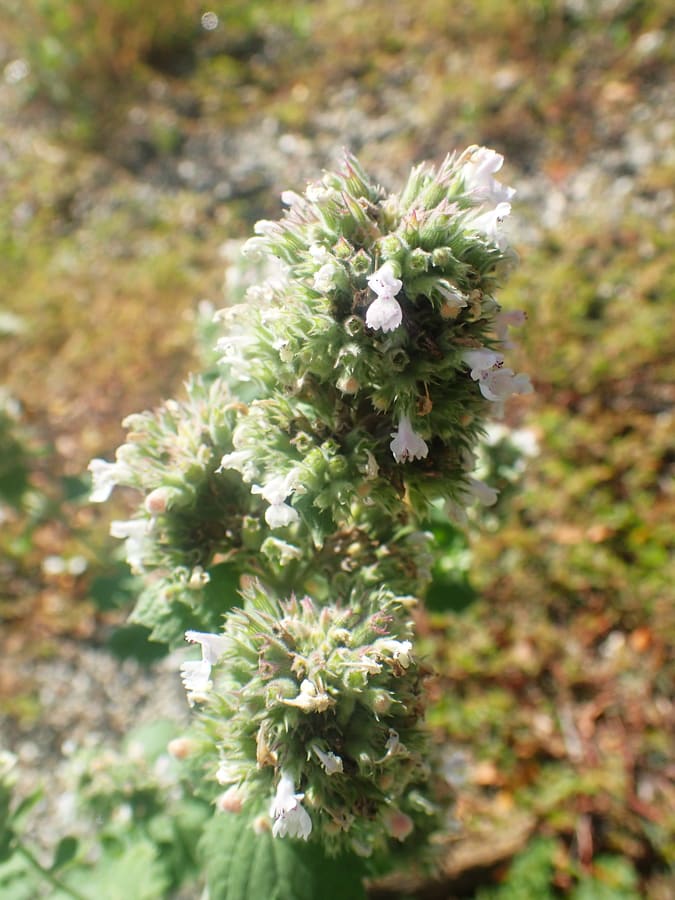 Catnip (Nepeta cataria)
Catnip is a downy, aromatic perennial growing to 3 feet with heart-shaped, gray-green leaves and whorls of white flowers marked with purple spots. Native to Europe and naturalized in North America, it grows in dry wayside places and mountainous regions up to altitudes of 5,000 feet. The plant is gathered when in flower during summer and autumn. Catnip has an excitatory effect on cats.
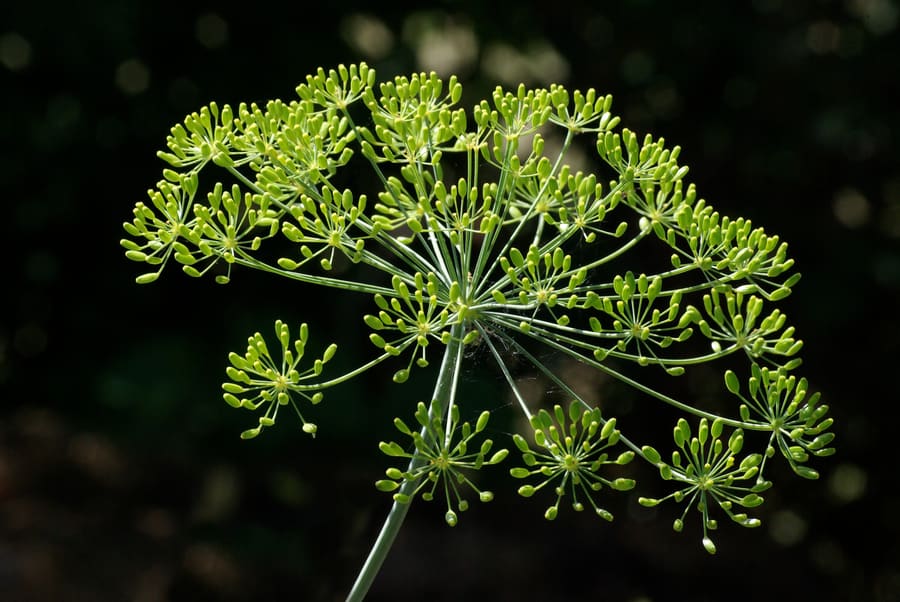 Dill (Anethum graveolens)
Dill is an aromatic annual growing to 30 inches with an erect hollow stem, feathery leaves, and numerous yellow flowers in umbels. Its very lightweight, pungent fruit (seeds) are harvested in late summer. Native to southern Europe and central and southern Asia, dill grows wild in open areas and is widely cultivated - notably in England, Germany, and North America. The leaves are picked as a culinary herb. Dill was commonly used as a charm against witchcraft in the Middle Ages, when it was burned to clear thunderclouds. Its name comes from the Norse 'dylla,' meaning 'to soothe.'
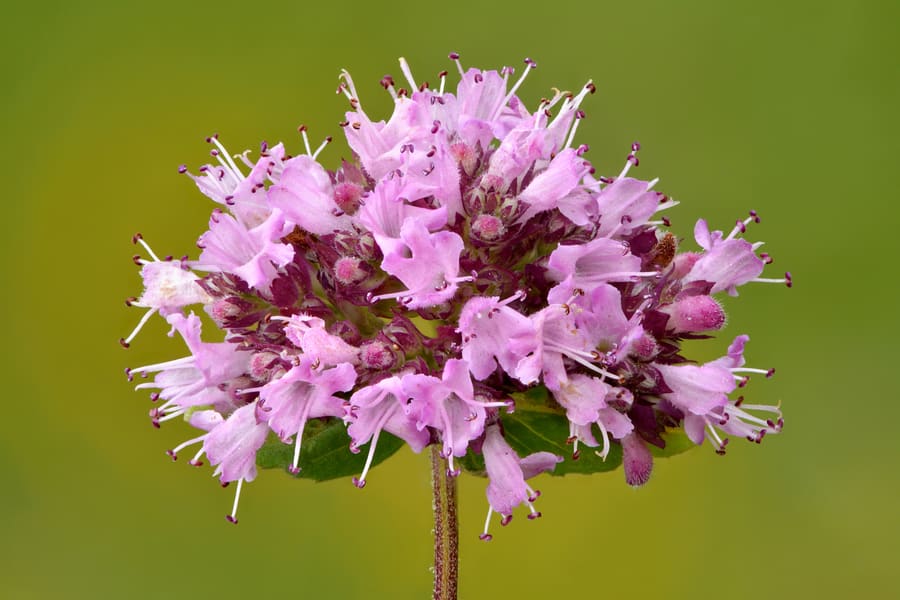 Oregano (Origanum vulgare)
Oregano (Origanum vulgare) is an upright perennial up to around 32 in (80 cm), bearing square red stems, elliptical leaves, and clusters of deep pink flowers. Strongly aromatic, oregano is a widely used culinary herb.
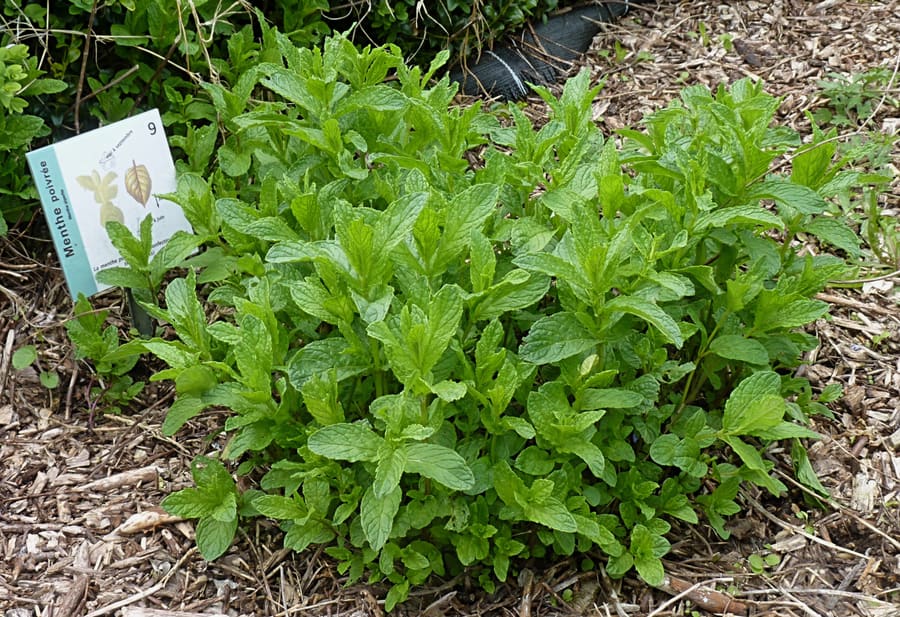 Peppermint (Mentha x piperita)
Peppermint (Mentha × piperita) is a fast-growing, square-stemmed herb (commonly about 32 in / 80 cm tall), with lanceolate, serrated leaves and purplish flowers. A natural hybrid of watermint and spearmint, peppermint is renowned for its cooling, aromatic flavor, and mint plants have been used for digestive disorders since ancient Greece, Rome and Egypt. NCCIH says a small amount of research suggests enteric-coated peppermint oil capsules may improve IBS symptoms in adults, but there is not enough evidence to know whether peppermint leaf helps any condition.
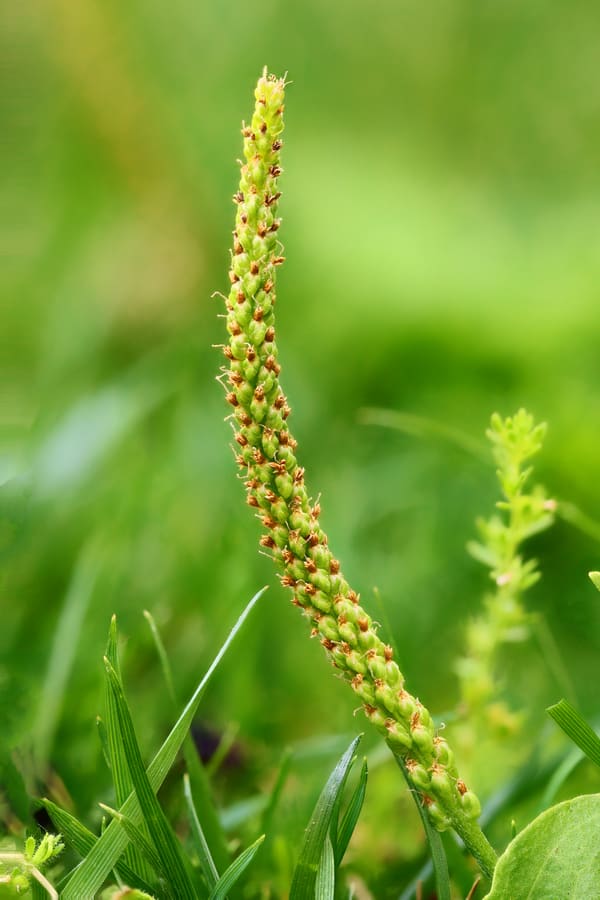 Plantain (Plantago major)
Common plantain (Plantago major) is a low-growing perennial reaching up to about 10 in (25 cm), forming a rosette of broad, ribbed leaves and spikes of tiny green flowers. Often regarded as a garden weed, plantain has leaves rich in iridoids, flavonoids, mucilage and tannins.
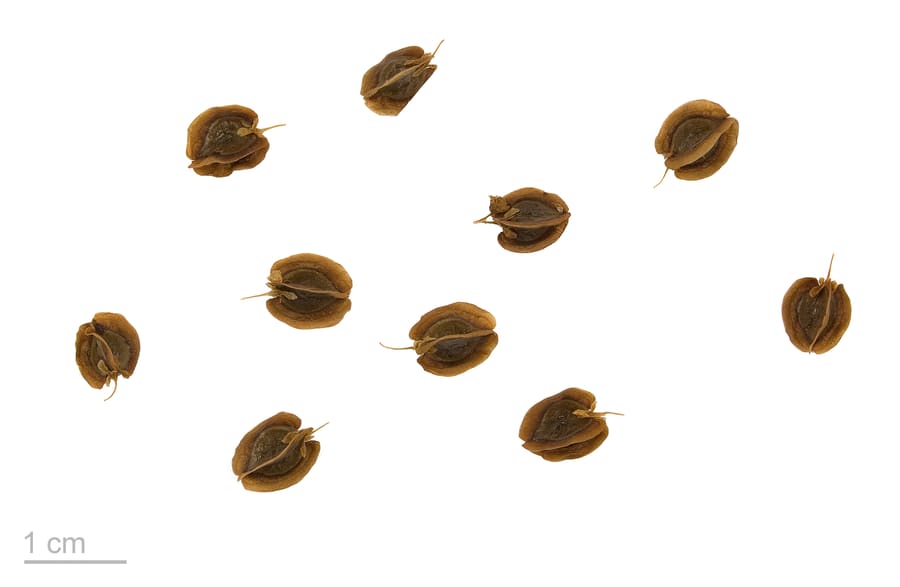 Chinese Rhubarb (Rheum palmatum)
Chinese rhubarb (Rheum palmatum) is a thick-rhizomed perennial, growing up to 10 ft (3 m) tall, with large, palmate leaves and small flowers. It has been used in Chinese medicine for over 2,000 years.
- Triphala (Terminalia chebula blend)
Triphala is not a single herb but a traditional Ayurvedic blend of three fruits: haritaki (Terminalia chebula), bibhitaki (Terminalia bellirica), and amalaki or Indian gooseberry (Emblica officinalis). Haritaki is described in Ayurveda as having five flavors (bitter, sour, astringent, salty, and sweet). Bibhitaki is described as pungent and warming. Amalaki is also described as having five flavors (sour, astringent, sweet, pungent, and bitter) and contains small amounts of anthraquinones.
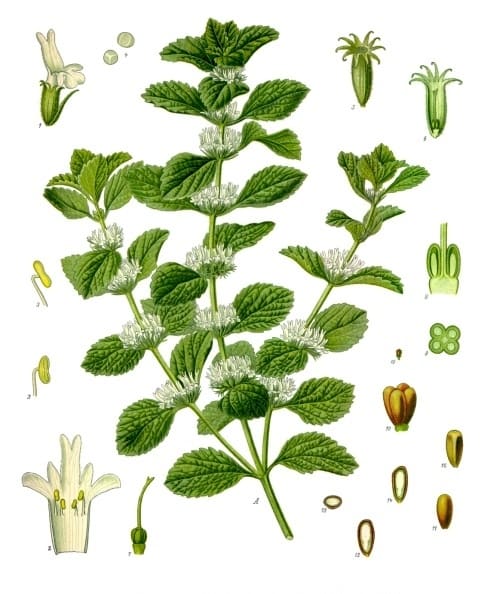 White Horehound (Marrubium vulgare)
Horehound (Marrubium vulgare) is a square-stemmed perennial of about 20 in (50 cm) height, featuring fuzzy, downy greenish-gray leaves and small, white, double-lipped flowers. It is known for its aromatic bitterness.