
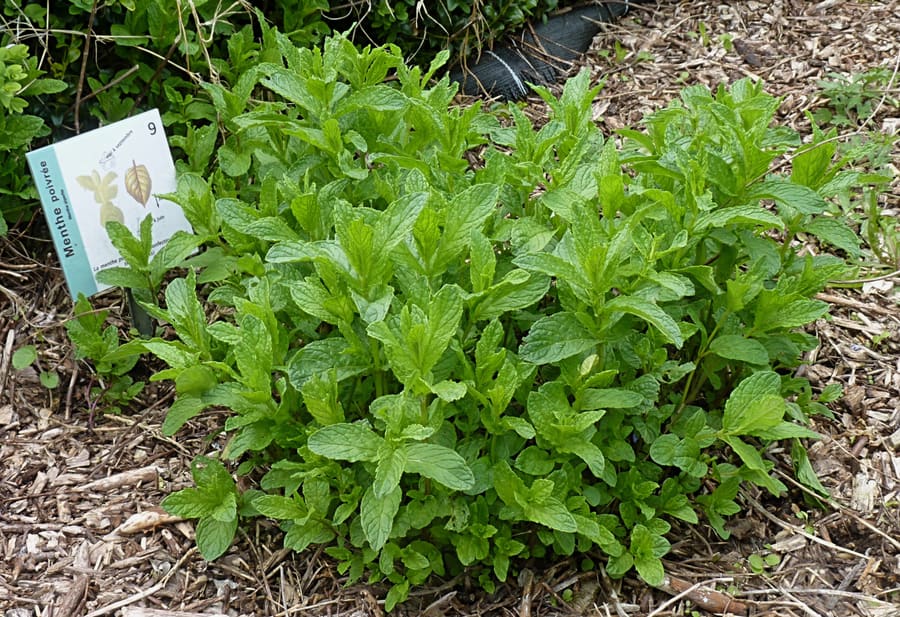
Peppermint (Mentha x piperita)
Photo: Jamain · CC BY-SA 3.0
- Digestive
- 2 conditions
- Licensed photo
Overview
Peppermint (Mentha × piperita) is a fast-growing, square-stemmed herb (commonly about 32 in / 80 cm tall), with lanceolate, serrated leaves and purplish flowers. A natural hybrid of watermint and spearmint, peppermint is renowned for its cooling, aromatic flavor, and mint plants have been used for digestive disorders since ancient Greece, Rome and Egypt. NCCIH says a small amount of research suggests enteric-coated peppermint oil capsules may improve IBS symptoms in adults, but there is not enough evidence to know whether peppermint leaf helps any condition.
Traditional uses & properties
Antispasmodic & Carminative: Traditionally used for gastrointestinal ailments; NCCIH says enteric-coated peppermint oil capsules may improve IBS symptoms in adults, but there is no evidence that peppermint oil alone helps indigestion. Headache: NCCIH says limited evidence suggests peppermint oil applied to the skin might relieve tension headaches. Inhaled oil: NCCIH warns that peppermint oil should not be applied to the face of infants or young children because the menthol may affect their breathing.
Amounts reported by sources
These are the amounts the named source reports, such as the doses used in studies or the directions on a product label. They are not a dosage recommendation from HerbMate. Products differ in strength and safe use depends on the person, so ask a pharmacist or clinician before taking any herb.
NCCIH says a small amount of research suggests enteric-coated peppermint oil capsules may improve IBS symptoms in adults.
Safety & precautions
Children under 5: Avoid giving peppermint tea in strong doses; can irritate sensitive mucous membranes. GERD & Heartburn: May aggravate reflux by relaxing the lower esophageal sphincter. Essential Oil Internally: Use only under professional supervision; not suitable for children under 12.
Educational reference only - not medical advice. Herbs can interact with medications. Consult a qualified healthcare provider before use. Full disclaimer.
Drug interactions
Most concern involves peppermint oil, not tea, and its effect on the enzyme CYP3A4. [1, 2]
- Felodipine
- In a 2002 crossover study in healthy volunteers, peppermint oil raised felodipine blood levels. The authors proposed CYP3A4 inhibition as a possible cause but said this needs more study. [1, 2]
- Cyclosporine
- Peppermint oil increased cyclosporine absorption in rats, yet MSK also describes a kidney transplant patient whose cyclosporine level fell after drinking an herbal tea that included peppermint. [2]
- Medicines broken down by liver enzymes
- Laboratory studies show peppermint oil and its constituents inhibit several CYP enzymes, including CYP3A4. [1, 2]
- Topical 5 fluorouracil
- Applied to the skin, peppermint oil can increase absorption of this cream. [2]
How to read this section: each entry is HerbMate's summary of what the cited sources report. Words such as "may", "theoretical" or "in laboratory or animal studies" mean the effect has not been confirmed in people, and "case report" means it was seen in one or a few patients. A medicine that is not listed here has not been shown to be safe with this herb. The numbers in brackets link to the sources at the foot of the page.
Habitat
Grown widely in Europe, Asia, and North America as a culinary and medicinal plant, peppermint is propagated from seed or runners in spring, and harvested just before flowering in summer. The aerial parts are used for infusions and distilled to yield essential oil.
Sources
The interaction notes and the statements on this page that name a source were written by HerbMate from these references, which were last checked in October 2026. They are summaries, not medical advice; ask a pharmacist about your own medicines.
Traditionally used for
Each condition shows its first 2 remedies free. Premium opens the full remedy list for every condition - or come back for the free Condition of the Day.
Frequently asked questions
What is Peppermint (Mentha x piperita) traditionally used for?
Traditional sources describe Peppermint (Mentha x piperita) as follows: Antispasmodic & Carminative: Traditionally used for gastrointestinal ailments; NCCIH says enteric-coated peppermint oil capsules may improve IBS symptoms in adults, but there is no evidence that peppermint oil alone helps indigestion. Headache: NCCIH says limited evidence suggests peppermint oil applied to the skin might relieve tension headaches. Inhaled oil: NCCIH warns that peppermint oil should not be applied to the face of infants or young children because the menthol may affect their breathing.
What amounts do sources report for Peppermint (Mentha x piperita)?
These are the amounts the named source reports, such as the doses used in studies or the directions on a product label. They are not a dosage recommendation from HerbMate. Products differ in strength and safe use depends on the person, so ask a pharmacist or clinician before taking any herb. Irritable Bowel Syndrome: NCCIH says a small amount of research suggests enteric-coated peppermint oil capsules may improve IBS symptoms in adults.
What safety cautions apply to Peppermint (Mentha x piperita)?
Children under 5: Avoid giving peppermint tea in strong doses; can irritate sensitive mucous membranes. GERD & Heartburn: May aggravate reflux by relaxing the lower esophageal sphincter. Essential Oil Internally: Use only under professional supervision; not suitable for children under 12.
Related herbs
 Caraway (Carum carvi)
Caraway is an aromatic annual herb growing to 2 feet with a ridged stem, feathery leaves, and umbels of white flowers in midsummer. Exploding capsules release two small narrow seeds. It grows wild in Europe, North Africa, and Asia, preferring sunny sites up to 6,600 feet above sea level. Cultivated in Europe, Russia, North Africa, and the United States, the seeds are harvested ripe in late summer. The seeds are commonly used in cooking.
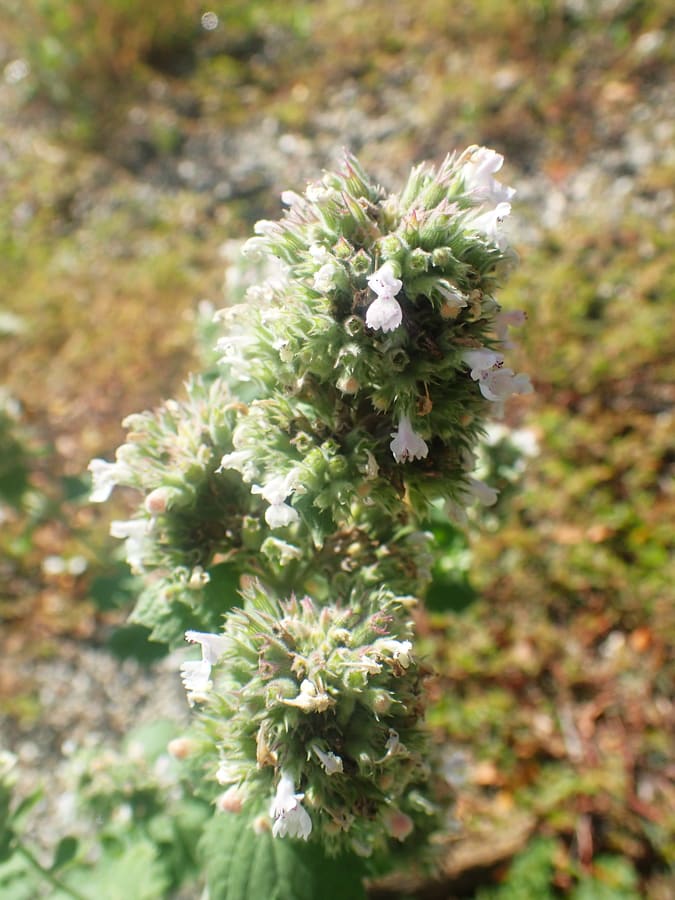 Catnip (Nepeta cataria)
Catnip is a downy, aromatic perennial growing to 3 feet with heart-shaped, gray-green leaves and whorls of white flowers marked with purple spots. Native to Europe and naturalized in North America, it grows in dry wayside places and mountainous regions up to altitudes of 5,000 feet. The plant is gathered when in flower during summer and autumn. Catnip has an excitatory effect on cats.
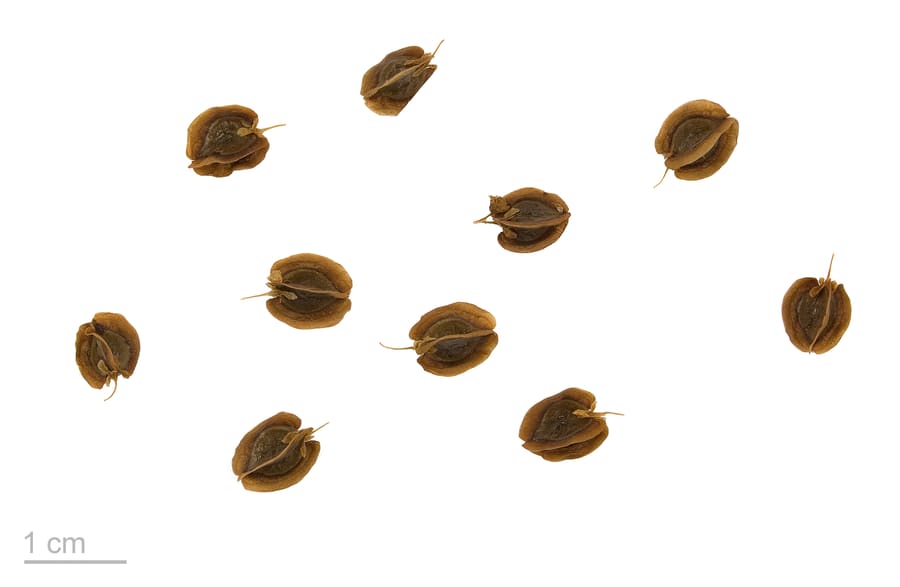 Chinese Rhubarb (Rheum palmatum)
Chinese rhubarb (Rheum palmatum) is a thick-rhizomed perennial, growing up to 10 ft (3 m) tall, with large, palmate leaves and small flowers. It has been used in Chinese medicine for over 2,000 years.
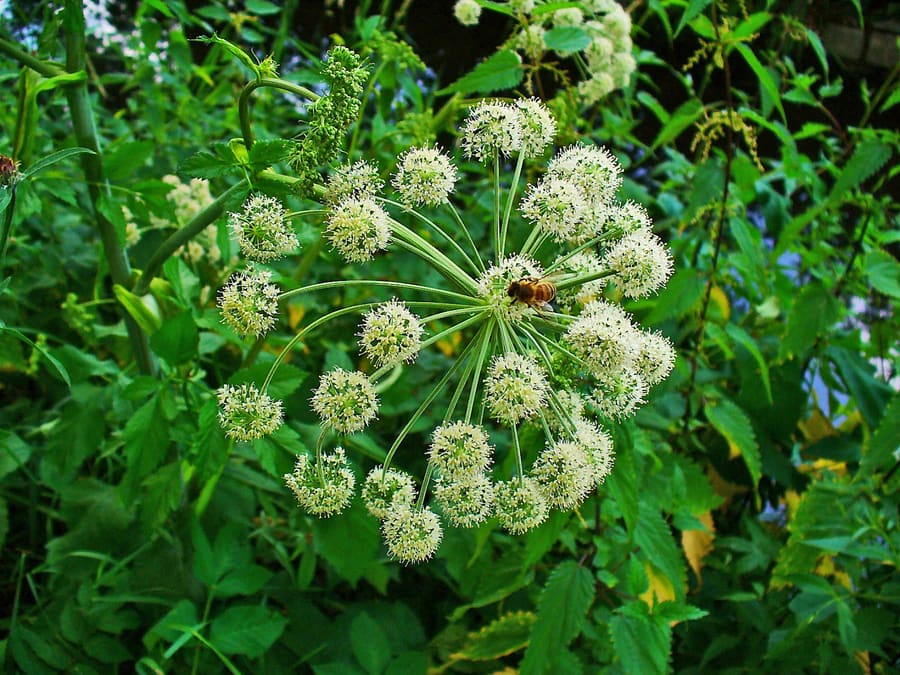 Angelica (angelica archangelica)
Angelica (Angelica archangelica) is a large, aromatic biennial herb growing up to about 6½ ft (2 m), with ridged hollow stems, bright green divided leaves, and greenish-white flowers arranged in umbrella-like clusters (umbels).
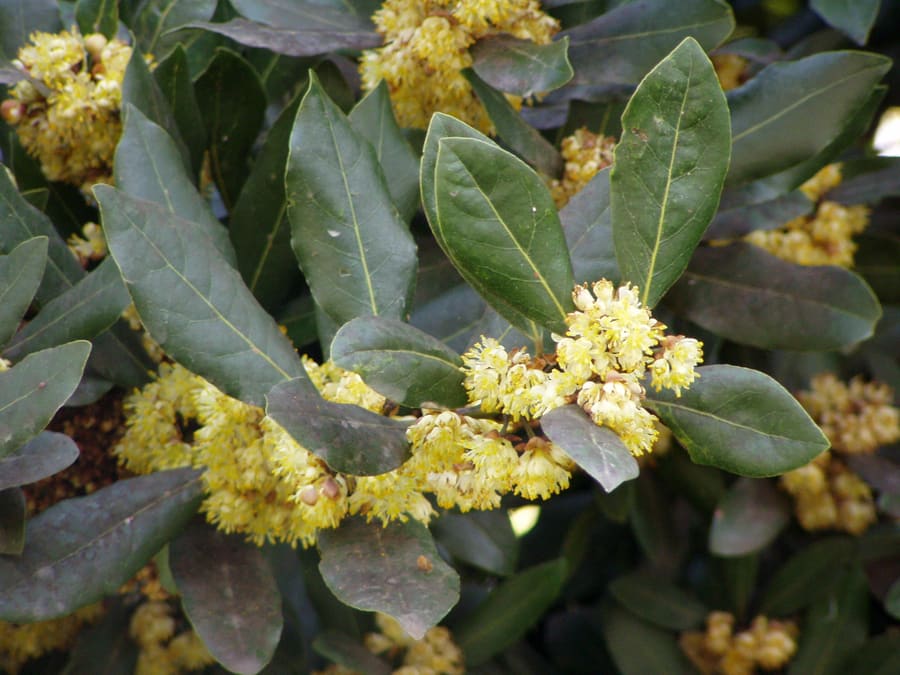 Bay laurel (Laurus nobilis)
Bay laurel (Laurus nobilis) is an aromatic evergreen shrub or small tree that can grow up to about 65 ft (20 m). It features leathery, dark green, lance-shaped leaves, small yellow flowers, and shiny black berries. The plant is well known for its culinary use (“bay leaves”) as well as its medicinal history in ancient Greece and Rome.
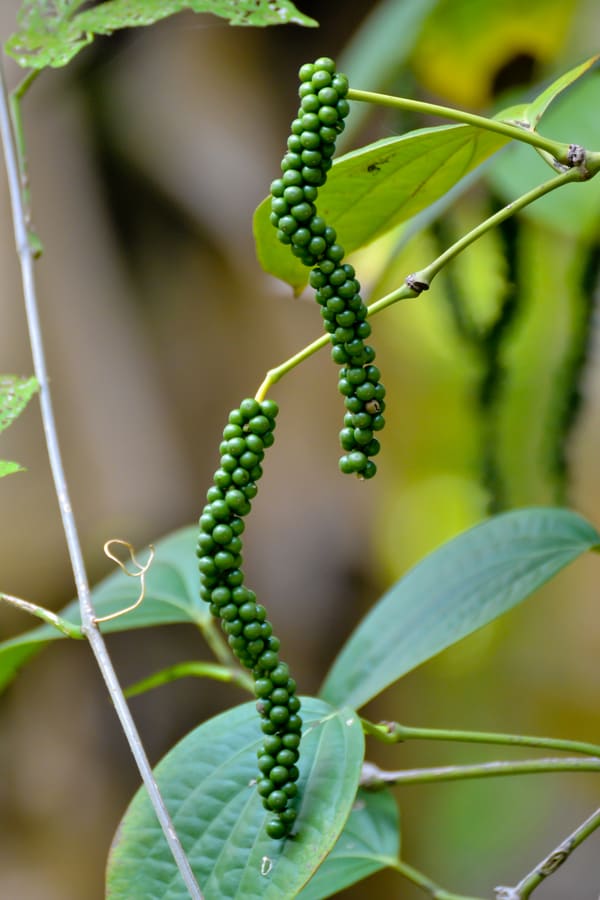 Black Pepper (Piper nigrum)
Black pepper is a perennial woody climbing vine growing to about 16 feet, with large oval leaves, spikes of small white flowers, and clusters of small round fruits that ripen from green to red. Native to southwestern India and now cultivated in tropical areas worldwide, the fruit is harvested from plants that are at least three years old. Different processing methods yield green, black, red, and white peppercorns, each with distinct flavors and uses. Cultivated as both a spice and medicine since ancient times, pepper was such a prized commodity in world trade that Attila the Hun reportedly demanded 3,000 pounds of it as ransom during his siege of Rome in 408 CE.
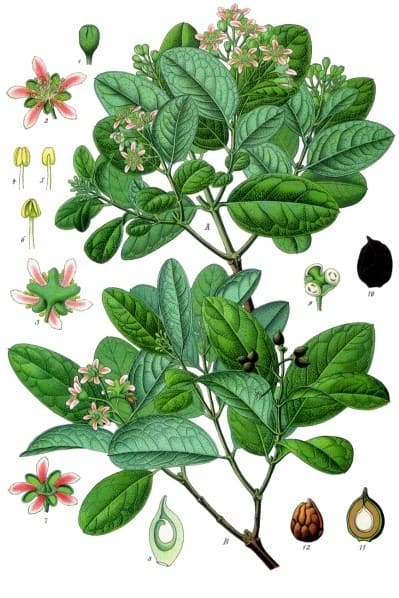 Boldo (Peumus boldus)Not for self-dosing
Boldo is a strongly aromatic multi-branched evergreen shrub or tree growing to 20 feet. It has egg-shaped leathery leaves with a lemony scent, clusters of white or yellow bell-shaped flowers, and small yellow berries. Native to Chile and Peru, it has become naturalized in the Mediterranean region and the West Coast of North America, where it grows on dry sunny slopes and in mountain pastures in the Andes. It is widely cultivated, and its leaves are gathered throughout the year.
- Cardamom (Eletteria cardamomum)
Cardamom is an aromatic spice long prized for its fragrant, pungent taste. Thanks to its agreeable flavor, cardamom is often added to herbal formulas to improve taste.