
Herb comparison
Irish Moss (Chondrus crispus) vs Meadowsweet (Filipendula ulmaria)
Both plants are listed as traditional remedies for 1 of the same condition, which is why they are easy to confuse. Their descriptions and full safety notes are below, free.
- About
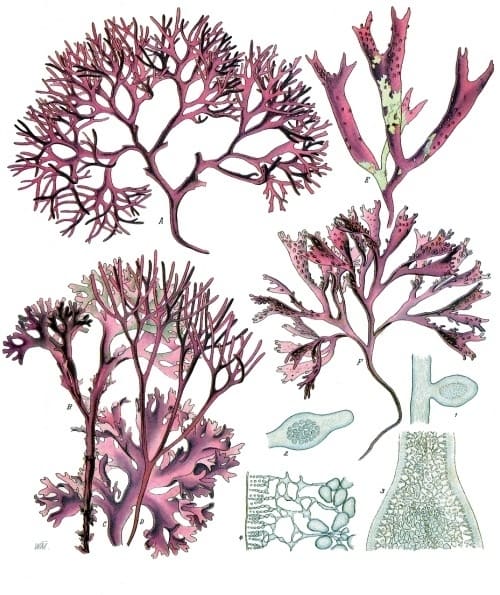
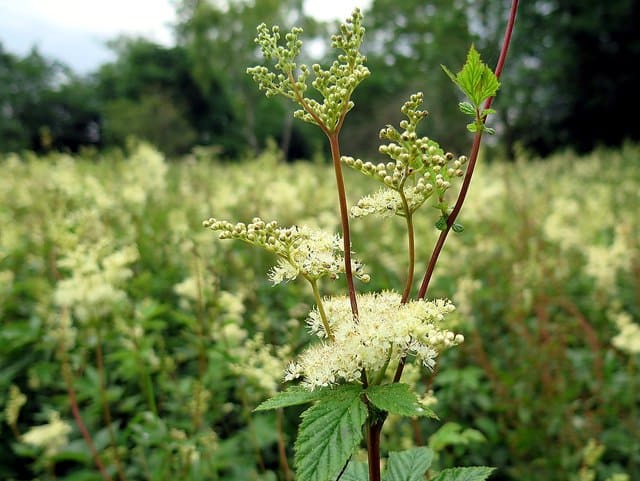
- Irish moss is a reddish-brown seaweed growing to 10 inches, with a flat, forked plant body and fan-shaped outline. Found on the Atlantic coasts of Europe and North America, it grows just below the waterline, attached to rocks and stones. In summer in North America and in autumn in Ireland, it is pulled up by hand or with a rake at low tide and dried in the sun. This seaweed is used extensively in the food and pharmaceutical industries as an emulsifying and binding agent, appearing in products such as toothpastes. Its polysaccharides become jelly-like when immersed in water, which makes it useful as a food ingredient.Meadowsweet (Filipendula ulmaria) is a perennial reaching about 5 ft (1.5 m), with toothed leaves and sweetly scented clusters of creamy-white flowers. Known historically as a strewing herb, meadowsweet contains salicylates, compounds related to aspirin.
- Safety & precautions
- Due to its blood-thinning property, Irish moss should not be used by people taking anticoagulant medicines.Children with Fevers: Some herbalists advise against using meadowsweet in children with febrile illnesses (similar caution as with aspirin). Large Doses: Excess can cause nausea or vomiting. Allergy: Avoid if allergic to aspirin (salicylates).
Safety text above is printed in full and is never abbreviated. For each plant’s complete precautions, drug and food interactions and preparation notes, open its own page - both are free.