
Herb comparison
Buchu (Barosma betulina) vs Tribulus (Tribulus terrestris)
Both plants are listed as traditional remedies for 1 of the same condition, which is why they are easy to confuse. Their descriptions and full safety notes are below, free.
- About
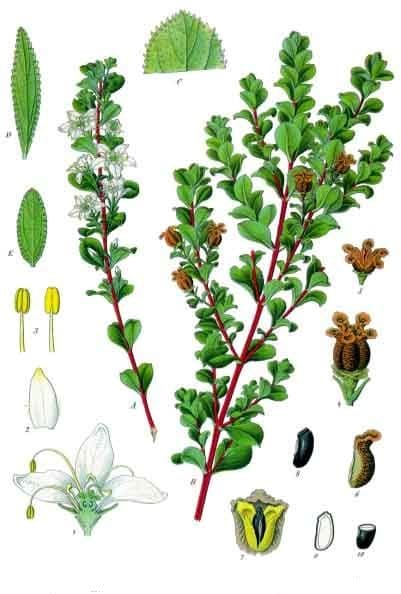
- Buchu is a strongly aromatic, bushy shrub reaching about 6½ ft (2 m), with slightly leathery, dotted leaves that release a distinctive scent.The fruit of the plant is the primary medicinal part used.
- Safety & precautions
- Dryness & Acute Inflammation: Not recommended if dryness predominates or if there is active, acute inflammation of the urinary tract. Children Under Two: Generally contraindicated for very young children. Pregnancy: Because buchu contains pulegone (a uterine stimulant), it should be avoided during pregnancy unless advised by a qualified healthcare practitioner. High Dosages: Potentially toxic in excessive amounts.Consult a healthcare provider before use, especially if taking hormone-related medications or if you have hormone-sensitive conditions.
Safety text above is printed in full and is never abbreviated. For each plant’s complete precautions, drug and food interactions and preparation notes, open its own page - both are free.
Conditions that list both
Related comparisons
- Buchu (Barosma betulina) vs Uva Ursi (Arctostaphylos uva-ursi)
- Buchu (Barosma betulina) vs Couch Grass (Elymus repens)
- Buchu (Barosma betulina) vs Cranberry (Vaccinium macrocarpon)
- Agrimony (agrimonia eupatoria) vs Buchu (Barosma betulina)
- Ashwagandha (Withania somnifera) vs Tribulus (Tribulus terrestris)
- Buchu (Barosma betulina) vs Juniper (Juniperus communis)