
Herb comparison
Bilberry (Vaccinium myrtillus) vs Eyebright (Euphrasia spp)
Both plants are listed as traditional remedies for 1 of the same condition, which is why they are easy to confuse. Their descriptions and full safety notes are below, free.
- About
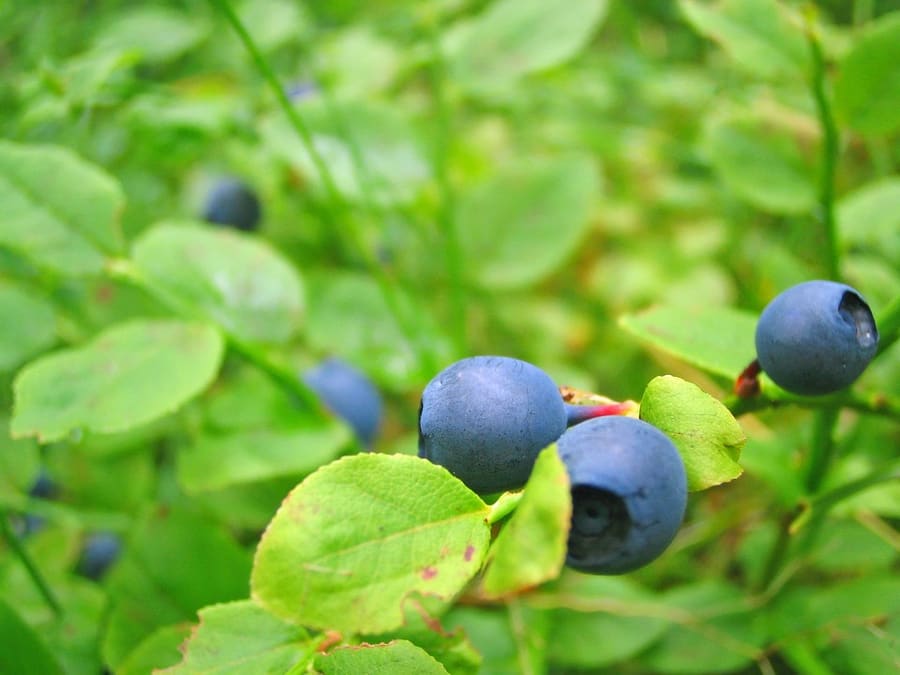
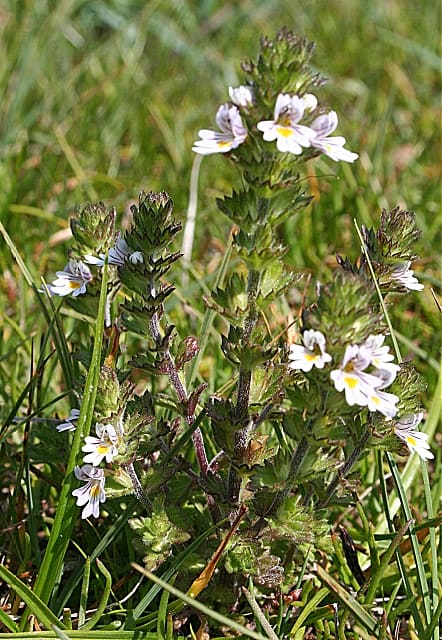
- Bilberry (Vaccinium myrtillus) has traditionally been used for conditions related to vision, and NCCIH says its anthocyanins and other substances may be of interest for further research. NCCIH says bilberry has not been clearly shown to help any health condition, and the most rigorous studies did not find that it improved night vision in healthy people. It is closely related to the blueberry.Creeping semi-parasitic annual growing to 20 in (50 cm). Has tiny oval leaves and small scallop-edged white flowers with yellow spots and a black center, somewhat resembling an eye.
- Safety & precautions
- Leaves (Long-Term Use): Extended consumption of bilberry leaves in high amounts may cause gastric irritation or kidney issues; NCCIH says bilberry leaves may be unsafe in high doses or over long periods. Blood Thinners: If you take anticoagulant medication or have a bleeding disorder, consult a qualified professional before using bilberry in medicinal doses.Eyebright tinctures used as eye drops can cause increased eye pressure, redness, watering, and swelling.
Safety text above is printed in full and is never abbreviated. For each plant’s complete precautions, drug and food interactions and preparation notes, open its own page - both are free.