
Herb comparison
Cornflower (Centaurea cyanus) vs Eyebright (Euphrasia spp)
Both plants are listed as traditional remedies for 1 of the same condition, which is why they are easy to confuse. Their descriptions and full safety notes are below, free.
- About
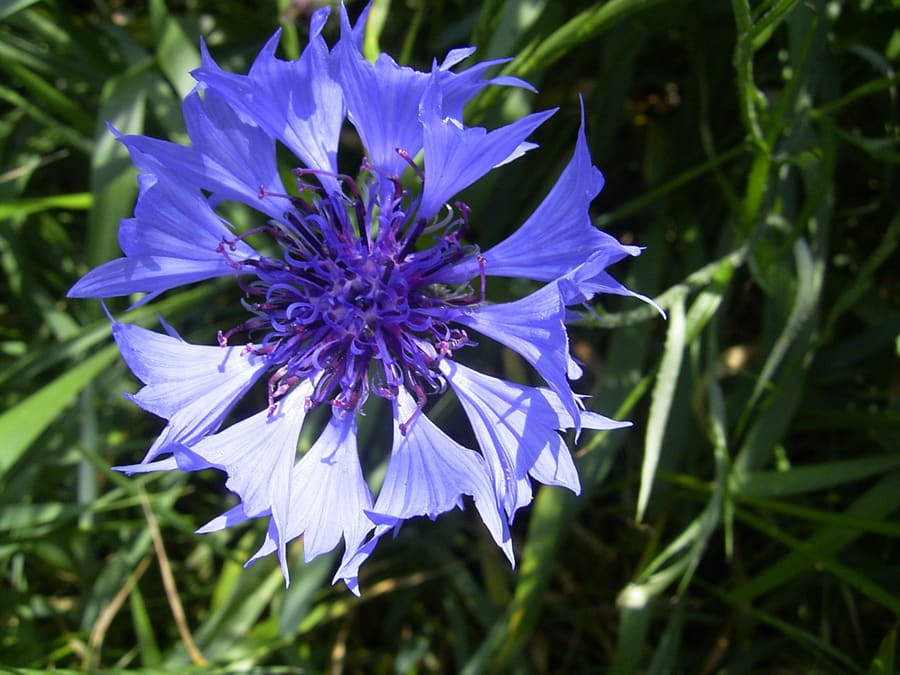
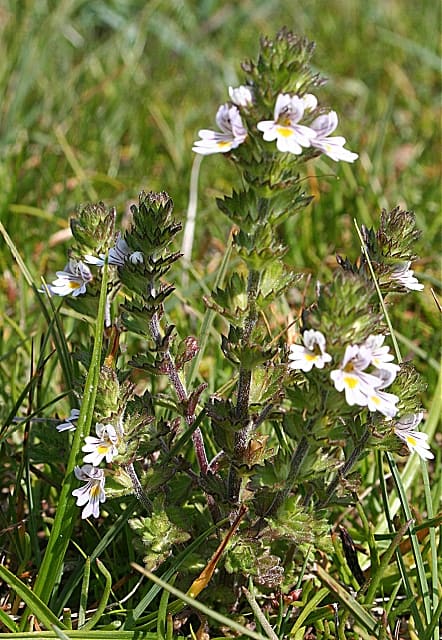
- Cornflower (Centaurea cyanus) is an annual or biennial plant reaching about 3 ft (90 cm). It has multiple branching stems, a rosette of lower leaves, and striking sky-blue flower heads that bloom in summer.Creeping semi-parasitic annual growing to 20 in (50 cm). Has tiny oval leaves and small scallop-edged white flowers with yellow spots and a black center, somewhat resembling an eye.
- Safety & precautions
- Potential Irritation: As with any herb, discontinue use if irritation occurs.Eyebright tinctures used as eye drops can cause increased eye pressure, redness, watering, and swelling.
Safety text above is printed in full and is never abbreviated. For each plant’s complete precautions, drug and food interactions and preparation notes, open its own page - both are free.