
Herb comparison
Oregano (Origanum vulgare) vs Triphala (Terminalia chebula blend)
Both plants are listed as traditional remedies for 2 of the same conditions, which is why they are easy to confuse. Their descriptions and full safety notes are below, free.
- About
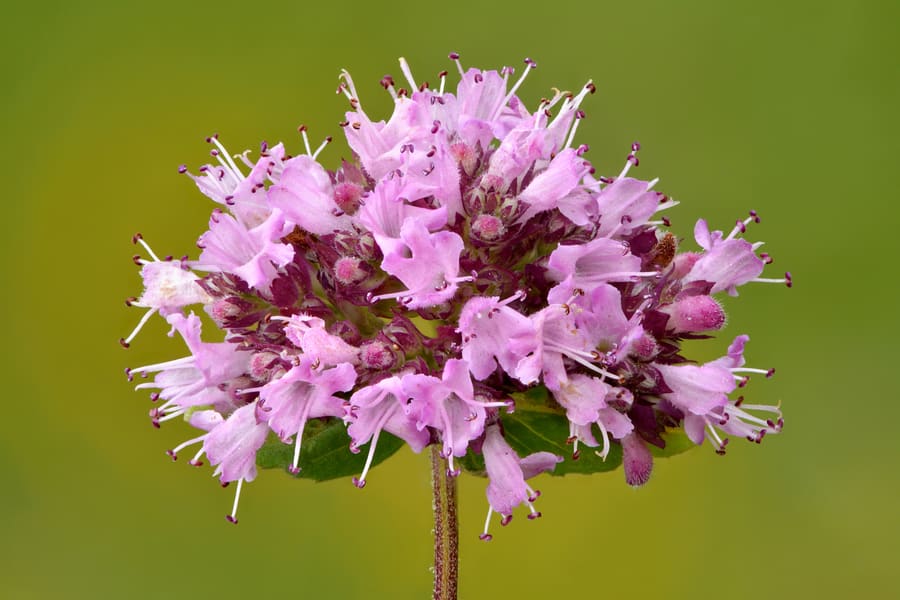
- Oregano (Origanum vulgare) is an upright perennial up to around 32 in (80 cm), bearing square red stems, elliptical leaves, and clusters of deep pink flowers. Strongly aromatic, oregano is a widely used culinary herb.Triphala is not a single herb but a traditional Ayurvedic blend of three fruits: haritaki (Terminalia chebula), bibhitaki (Terminalia bellirica), and amalaki or Indian gooseberry (Emblica officinalis). Haritaki is described in Ayurveda as having five flavors (bitter, sour, astringent, salty, and sweet). Bibhitaki is described as pungent and warming. Amalaki is also described as having five flavors (sour, astringent, sweet, pungent, and bitter) and contains small amounts of anthraquinones.
- Safety & precautions
- Pregnancy: Avoid in large amounts due to possible uterine stimulation. Essential Oil: Toxic to the liver when taken internally; external use must be diluted. Skin Irritation: Potentially irritating topically.Medicines: MSK notes that triphala may increase side effects from drugs processed by the CYP3A4 and CYP2D6 enzymes, so ask a pharmacist before combining it with medicines.
Safety text above is printed in full and is never abbreviated. For each plant’s complete precautions, drug and food interactions and preparation notes, open its own page - both are free.
Conditions that list both
Related comparisons
- Black Pepper (Piper nigrum) vs Triphala (Terminalia chebula blend)
- Boldo (Peumus boldus) vs Triphala (Terminalia chebula blend)
- Garlic (Allium sativum) vs Triphala (Terminalia chebula blend)
- Bay laurel (Laurus nobilis) vs Triphala (Terminalia chebula blend)
- Caraway (Carum carvi) vs Oregano (Origanum vulgare)
- Oregano (Origanum vulgare) vs White Horehound (Marrubium vulgare)