
Herb comparison
Boldo (Peumus boldus) vs Triphala (Terminalia chebula blend)
Both plants are listed as traditional remedies for 3 of the same conditions, which is why they are easy to confuse. Their descriptions and full safety notes are below, free.
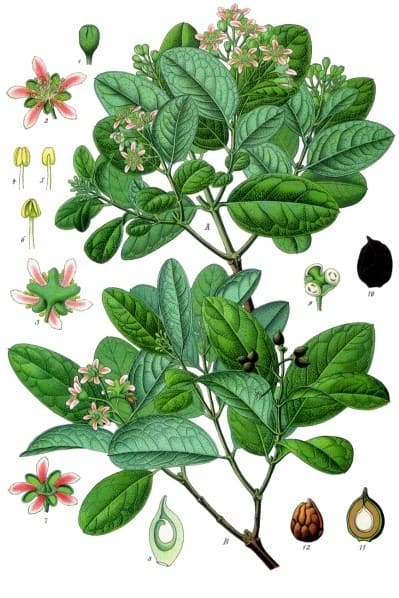
Boldo (Peumus boldus) is restricted
Preparation amounts are not shown for this herb. It is toxic, restricted, or otherwise unsafe to self-dose - the margin between a traditional dose and a harmful one is too small to publish as reference material. If you are considering it, that conversation belongs with a doctor or a qualified practitioner, not a website.
- About
- Boldo is a strongly aromatic multi-branched evergreen shrub or tree growing to 20 feet. It has egg-shaped leathery leaves with a lemony scent, clusters of white or yellow bell-shaped flowers, and small yellow berries. Native to Chile and Peru, it has become naturalized in the Mediterranean region and the West Coast of North America, where it grows on dry sunny slopes and in mountain pastures in the Andes. It is widely cultivated, and its leaves are gathered throughout the year.Triphala is not a single herb but a traditional Ayurvedic blend of three fruits: haritaki (Terminalia chebula), bibhitaki (Terminalia bellirica), and amalaki or Indian gooseberry (Emblica officinalis). Haritaki is described in Ayurveda as having five flavors (bitter, sour, astringent, salty, and sweet). Bibhitaki is described as pungent and warming. Amalaki is also described as having five flavors (sour, astringent, sweet, pungent, and bitter) and contains small amounts of anthraquinones.
- Safety & precautions
- Do not take during pregnancy. Subject to legal restrictions in some countries due to the presence of ascaridole, a toxic constituent in the volatile oil. The dose and duration of treatment should be restricted to minimize risk. If you take a blood thinner or any other prescription medicine, ask a pharmacist before using boldo.Medicines: MSK notes that triphala may increase side effects from drugs processed by the CYP3A4 and CYP2D6 enzymes, so ask a pharmacist before combining it with medicines.
Safety text above is printed in full and is never abbreviated. For each plant’s complete precautions, drug and food interactions and preparation notes, open its own page - both are free.
Conditions that list both
Related comparisons
- Boldo (Peumus boldus) vs Fringe Tree (Chionanthus virginicus)
- Black Pepper (Piper nigrum) vs Triphala (Terminalia chebula blend)
- Garlic (Allium sativum) vs Triphala (Terminalia chebula blend)
- Bay laurel (Laurus nobilis) vs Triphala (Terminalia chebula blend)
- Boldo (Peumus boldus) vs Irish Moss (Chondrus crispus)
- Boldo (Peumus boldus) vs Milk Thistle (Silybum marianum)