
Herb comparison
Borage (Borago officinalis) vs Pulsatilla (Pulsatilla vulgaris)
Both plants are listed as traditional remedies for 1 of the same condition, which is why they are easy to confuse. Their descriptions and full safety notes are below, free.
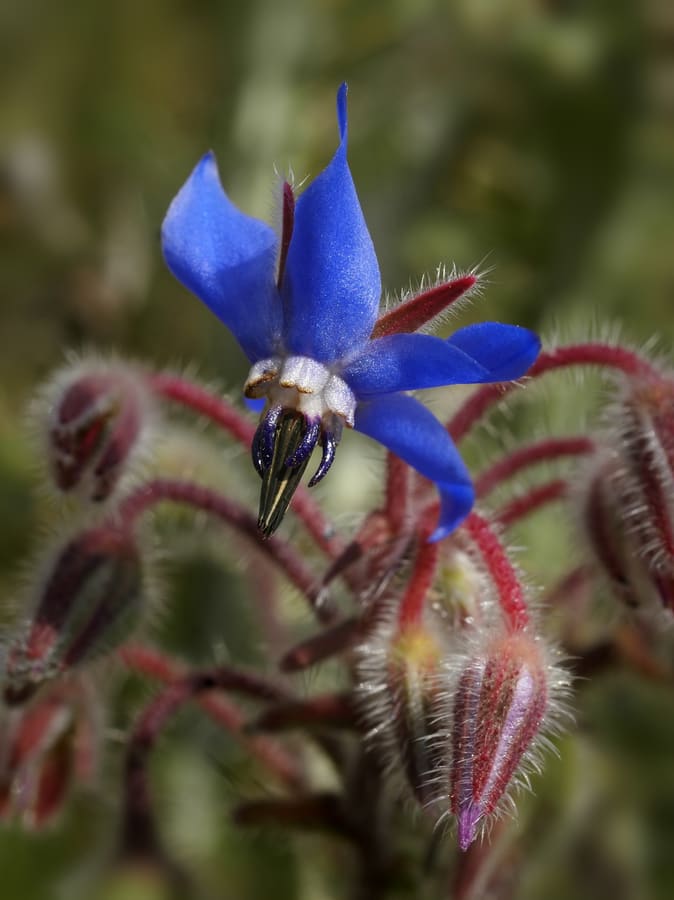
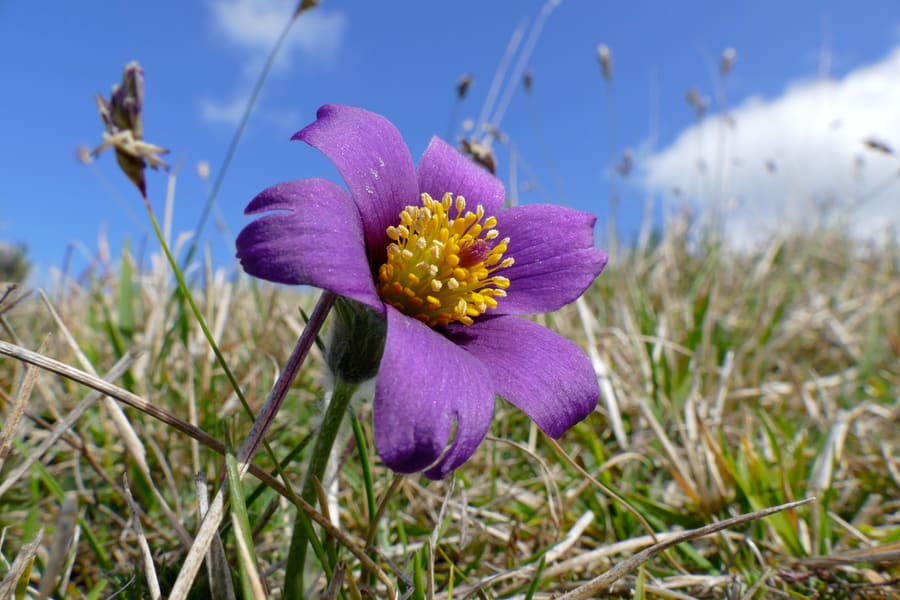
Borage (Borago officinalis) and Pulsatilla (Pulsatilla vulgaris) are restricted
Preparation amounts are not shown for this herb. It is toxic, restricted, or otherwise unsafe to self-dose - the margin between a traditional dose and a harmful one is too small to publish as reference material. If you are considering it, that conversation belongs with a doctor or a qualified practitioner, not a website.
- About
- Borage (Borago officinalis) is a coarse, hairy annual that grows to about 2 ft (60 cm), featuring a succulent stem, large basal leaves, and distinctively bright blue star-shaped flowers. The seeds yield an oil rich in gamma-linolenic acid (GLA), a polyunsaturated fatty acid.Pulsatilla (Pulsatilla vulgaris), also known as pasque flower, is a small, hairy perennial to about 6 in (15 cm). It bears purple-blue, bell-shaped flowers in spring.
- Safety & precautions
- Pyrrolizidine alkaloids: The borage plant contains these liver-toxic compounds. In 2001 the U.S. FDA advised that supplements containing any source of them be taken off the market, so avoid the herb internally. Seed oil: MSK advises using only borage oil products that carry certification that they are free of unsaturated pyrrolizidine alkaloids, notes that small amounts can remain, and says liver risk rises with longer use and larger total intake. Avoid borage oil if you have liver disease or are pregnant or breastfeeding, and talk to a clinician before using it if you take any medicine.Professional Supervision: Pulsatilla can cause severe gastroenteritis and other symptoms if overdosed; best used under skilled guidance. Pregnancy & Lactation: Avoid due to potential uterine stimulation. Fresh Plant: Highly irritant; not for internal use.
Safety text above is printed in full and is never abbreviated. For each plant’s complete precautions, drug and food interactions and preparation notes, open its own page - both are free.
Conditions that list both
Related comparisons
- Ashwagandha (Withania somnifera) vs Borage (Borago officinalis)
- Astragalus (Astragalus membranaceus) vs Borage (Borago officinalis)
- Borage (Borago officinalis) vs Chickweed (Stellaria media)
- Borage (Borago officinalis) vs Lemon Balm (Melissa officinalis)
- Lemon Balm (Melissa officinalis) vs Pulsatilla (Pulsatilla vulgaris)