Herb comparison
Alfalfa (Medicago sativa) vs Sage (Salvia officinalis)
Both plants are listed as traditional remedies for 1 of the same condition, which is why they are easy to confuse. Their descriptions and full safety notes are below, free.
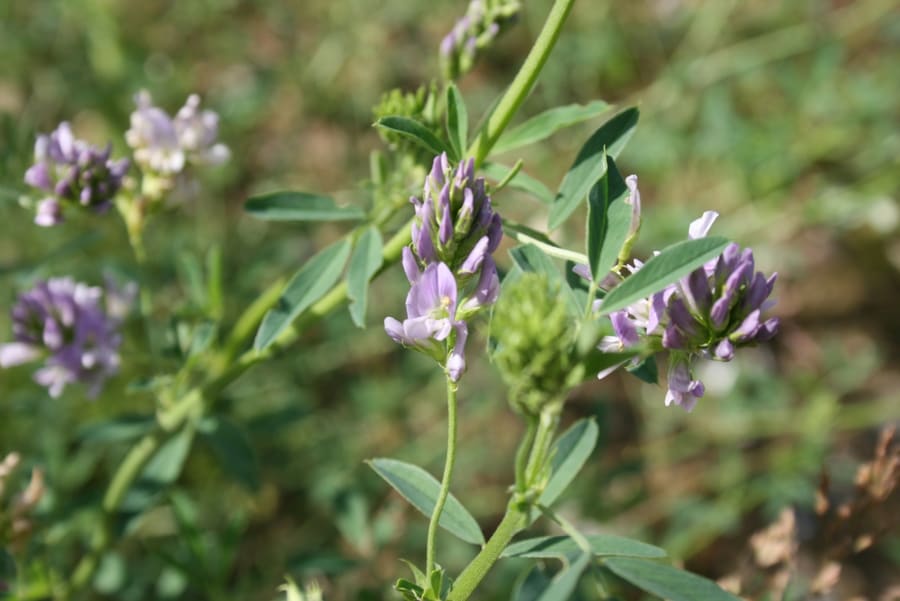
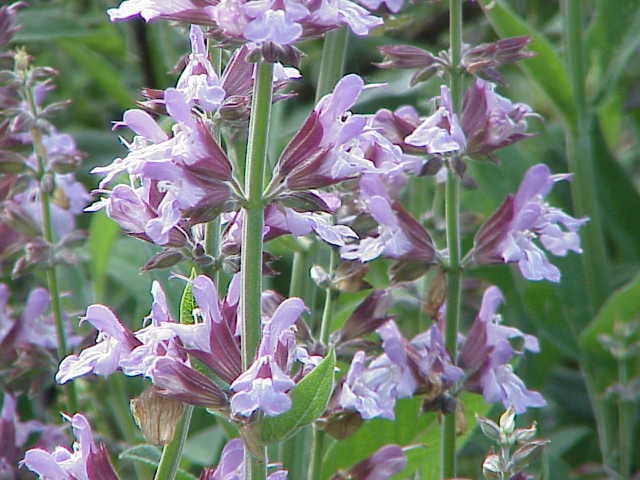
- About
- Alfalfa is a perennial herb that can grow to about 32 in (80 cm). It produces trifoliate leaves, flowers ranging from yellow to violet-blue, and spiraling seed pods. It has been called the “king of herbs,” with roots that can extend many feet into the ground to draw up minerals.Sage (Salvia officinalis) is an evergreen subshrub that grows about 32 in (80 cm) high, with gray-green, downy leaves, square stems, and small blue to purple flowers. Known primarily as a culinary herb, sage has also been used traditionally for digestive, respiratory, and skin problems. NCCIH says only small amounts of research have been done on sage, although a few small studies suggest it might reduce hot flashes. It has a distinctly warm, bitter, and astringent flavor.
- Safety & precautions
- Alfalfa contains canavanine, which can induce lupus-like symptoms in susceptible individuals or worsen existing autoimmune conditions. Not recommended alongside anticoagulant medications (such as warfarin) because it can interfere with blood-thinning effects. The sprouted seeds should be avoided in immunocompromised states or during pregnancy. Excessive daily consumption of seeds may lead to blood clotting problems.Pregnancy & Nursing: Large doses are not recommended; sage dries up breast milk. Epilepsy: High doses or essential oil may trigger seizures. Allergies: Rare, but caution if reacting to aromatic or mint-family herbs.
Safety text above is printed in full and is never abbreviated. For each plant’s complete precautions, drug and food interactions and preparation notes, open its own page - both are free.