
Herb comparison
Corydalis (Corydalis yanhusuo) vs Solomon’s Seal (Polygonatum multiflorum)
Both plants are listed as traditional remedies for 1 of the same condition, which is why they are easy to confuse. Their descriptions and full safety notes are below, free.
- About
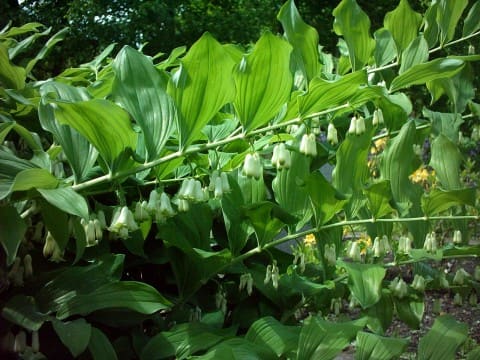
- Corydalis is a small herbaceous perennial growing to 8 inches with narrow leaves and pink flowers. Native to Siberia, northern China, and Japan, it is commonly cultivated in eastern and northeastern parts of China. Propagated from seed in early spring or autumn, the rhizome is harvested in late spring and early summer when the aerial parts have withered. It has been part of Chinese herbal medicine since at least the 8th century.Solomon’s seal (Polygonatum multiflorum) is a perennial up to about 20 in (50 cm), with arching stems, elliptical leaves, and bell-shaped greenish-white flowers, followed by blue-black berries.
- Safety & precautions
- Do not take during pregnancy. Its alkaloids act on the central nervous system; use it only with professional guidance.Berries: Potentially harmful if ingested. Internal Use: Best with professional guidance. General: Often recommended topically or for short therapeutic courses.
Safety text above is printed in full and is never abbreviated. For each plant’s complete precautions, drug and food interactions and preparation notes, open its own page - both are free.