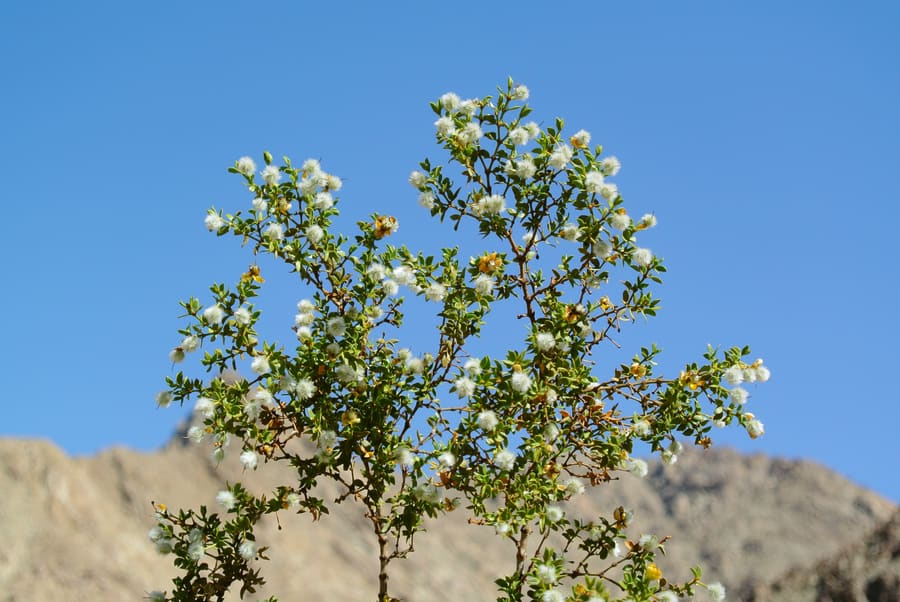
Chaparral (Larrea tridentata)
Photo: Adbar · CC BY-SA 3.0
- Licensed photo
Overview
Chaparral (Larrea tridentata) is a thorny desert shrub with small, finely divided leaves, historically regarded as a “blood purifier.” It contains the antioxidant NDGA (nordihydroguaiaretic acid). MSK says chaparral has not been shown to treat any medical condition and has been linked to liver toxicity. Native Americans used it for skin sores, rheumatism, colds and other conditions, and it has been used as a folk remedy for cancer (MSK).
Traditional uses & properties
Alterative: Native Americans used it for conditions including cancer, though a clinical trial cited by MSK found it ineffective as an anticancer agent. Antioxidant (NDGA) & Antiseptic: Traditionally used for infections; MSK says evidence that chaparral treats any medical condition is lacking. Bitter & Anti-inflammatory: Traditionally used for inflammation and arthritis; MSK says there is no scientific evidence for these uses.
Amounts reported by sources
Preparation amounts are not shown for this herb. It is toxic, restricted, or otherwise unsafe to self-dose - the margin between a traditional dose and a harmful one is too small to publish as reference material. If you are considering it, that conversation belongs with a doctor or a qualified practitioner, not a website.
Safety & precautions
Liver toxicity: Chaparral has been tied to over two dozen published reports of liver injury, some leading to emergency liver transplantation and others to cirrhosis. LiverTox rates it a likely, though now rarely reported, cause of liver injury, and MSK likewise warns of severe liver damage. Avoid taking chaparral by mouth. Pregnancy & Other Conditions: Contraindicated in kidney disease, liver disease, and pregnancy. Professional Supervision: Not suitable for self-treatment.
Educational reference only - not medical advice. Herbs can interact with medications. Consult a qualified healthcare provider before use. Full disclaimer.
Drug interactions
Interaction data is not available for this herb - talk to a pharmacist before combining it with any medication. A blank entry here means we have not documented interactions, not that none exist.
Habitat
This plant is abundant in the deserts of the southwestern U.S. and parts of Mexico. The aerial portions (leaves and twigs) are typically harvested for medicinal use.
Sources
The interaction notes and the statements on this page that name a source were written by HerbMate from these references, which were last checked in October 2026. They are summaries, not medical advice; ask a pharmacist about your own medicines.
Frequently asked questions
What is Chaparral (Larrea tridentata) traditionally used for?
Traditional sources describe Chaparral (Larrea tridentata) as follows: Alterative: Native Americans used it for conditions including cancer, though a clinical trial cited by MSK found it ineffective as an anticancer agent. Antioxidant (NDGA) & Antiseptic: Traditionally used for infections; MSK says evidence that chaparral treats any medical condition is lacking. Bitter & Anti-inflammatory: Traditionally used for inflammation and arthritis; MSK says there is no scientific evidence for these uses.
How is Chaparral (Larrea tridentata) prepared?
Preparation amounts are not shown for this herb. It is toxic, restricted, or otherwise unsafe to self-dose - the margin between a traditional dose and a harmful one is too small to publish as reference material. If you are considering it, that conversation belongs with a doctor or a qualified practitioner, not a website.
What safety cautions apply to Chaparral (Larrea tridentata)?
Liver toxicity: Chaparral has been tied to over two dozen published reports of liver injury, some leading to emergency liver transplantation and others to cirrhosis. LiverTox rates it a likely, though now rarely reported, cause of liver injury, and MSK likewise warns of severe liver damage. Avoid taking chaparral by mouth. Pregnancy & Other Conditions: Contraindicated in kidney disease, liver disease, and pregnancy. Professional Supervision: Not suitable for self-treatment.